The future is not white, male and full-time. Neither can the trade union of the future be.
Young People: Is Precariousness Becoming Normal?
For many young people, work is insecure, underpaid and temporary. They move from assignment to assignment, receive no training, build up few rights and are rarely involved in collective decision-making. Many young people know the trade union only by name - if at all.
That gives us a task. Not to ‘convince’ young people, but to listen, involve them and give them space. Young people do care about justice, participation and solidarity, but they need a language and a form that fit their lives.
That also demands self-criticism. Where do we make room? How do we create space for young representatives on councils, at congresses and in negotiations?
Young people are not the future. They are the present. That means involving them fully in trade union work. It also means developing trade union structures for young workers, many of whom are employed under precarious arrangements. Organising platform workers is one example.
Platform work is no longer a marginal phenomenon. According to estimates by the International Labour Organization and the World Bank, more than 130 million people worldwide are currently active in some form of platform work. That number grows year after year. Even if trade unions managed to organise only one per cent of that group actively, that would already amount to more than 1.3 million new members worldwide. Organising platform workers is therefore not a niche task, but one of the major trade union challenges of the coming decades.
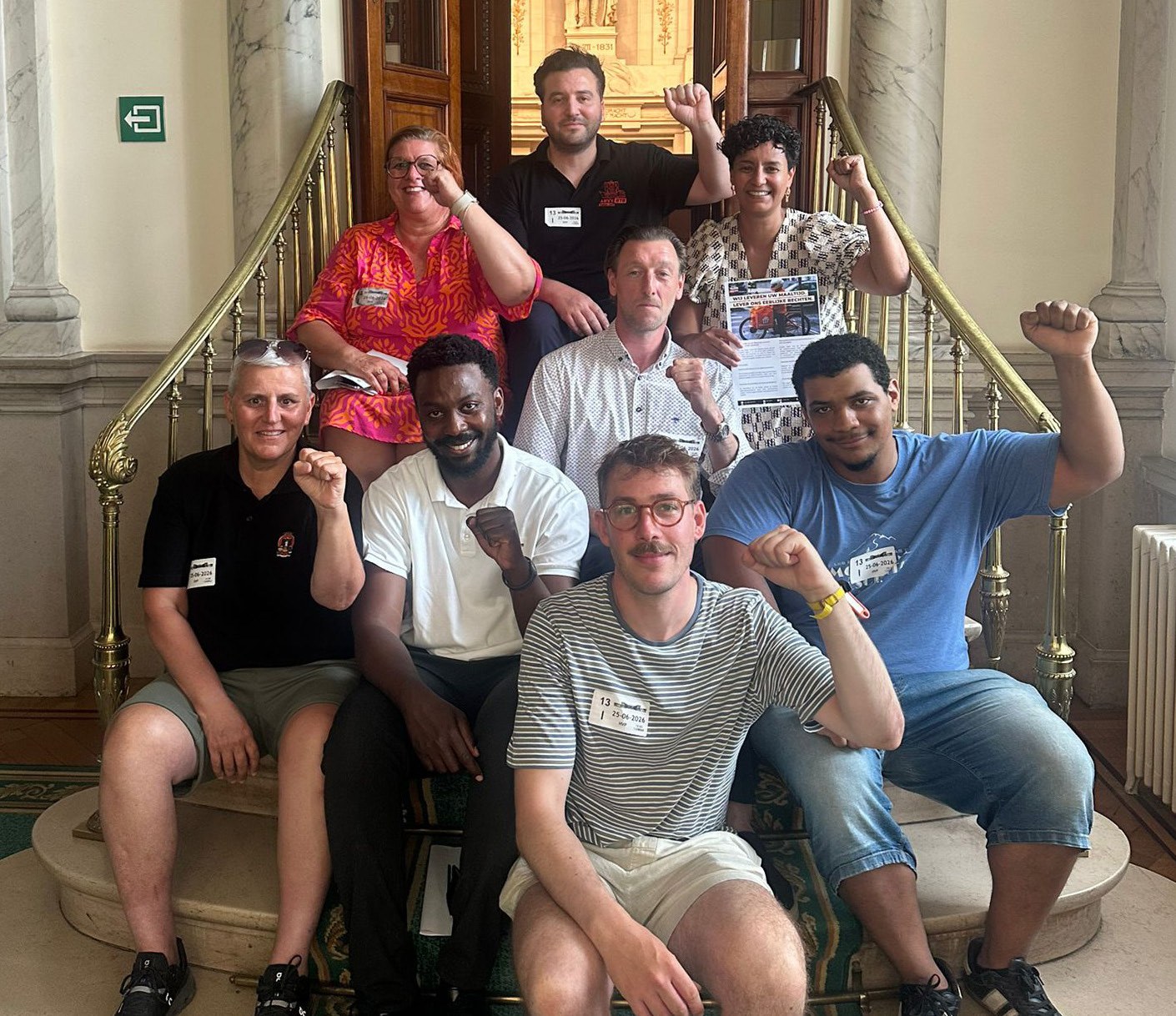
Our forms of organisation must therefore adapt to new realities. Young people are more likely to work through apps, temporary contracts, agency work or hybrid employment statuses. A union that wants to remain relevant must be present where these workers are: online, on platforms, in educational institutions and in new workplaces that often no longer resemble a traditional workplace.
Women: Structurally Undervalued
Women remain structurally underrepresented in leadership positions within the trade union movement and overrepresented in the lowest-paid and least-protected sectors. Think of cleaning, retail, care, logistics and administration.
Changing that is not only a matter of equality, but an economic necessity. In several transport occupations, employers today face structural labour shortages. Yet much of the sector is still organised from a historically male perspective. Anyone serious about tomorrow’s labour market cannot afford to unconsciously exclude half of the available talent.
In transport, it often begins with practical matters: appropriate sanitary facilities, separate changing rooms, suitable workwear and safe rest areas. But behind those issues lies a much more fundamental problem: workplace culture.
A large-scale study by the European Transport Workers’ Federation confirmed this problem. At the Executive Committee meeting in April 2026, the ETF presented the results of a European survey on violence and harassment against women transport workers. A total of 1,732 women from 27 countries and nine different transport sectors took part.
The results are shocking. More than 71 per cent of the respondents said they had experienced violence or harassment while doing their job. In almost half of the cases, this involved actual violence. Of those incidents, 75.4 per cent involved verbal violence, 7.5 per cent physical violence and 6.7 per cent sexual violence.
These figures show that the debate about getting more women into transport is not only about recruitment. It is also about safety, respect and dignity at work. A sector that wants to attract women must first show that women can work there safely.
If we want equality, we have to enforce it. There is no automatic correction. Our movement is not complete as long as women do not have an equal voice, in words and in practice.
If we take inclusion seriously, we must not only demand equal pay, but enforce it through collective bargaining. That requires gender-aware policies in collective agreements, active measures against sexism and inappropriate behaviour at work, recognition of care work as full-fledged socially valuable work, and a much stronger presence of women in trade union leadership roles. Equality does not arise by itself. It requires deliberate choices and structural action.
Inclusion Is Not A Campaign. It Is A Structure
Diversity is not about photographs in brochures, but about how we meet, communicate and organise. Who is heard? Who feels welcome? Who receives mandates?
Inclusion also means ensuring our organisations reflect the reality of the modern labour market. A union organised exclusively around the traditional full-time worker with a permanent contract risks losing sight of ever larger groups of working people. Platform workers, migrant workers, young workers moving from one temporary contract to another and workers in new digital occupations must feel just as welcome in the trade union movement as workers in traditional sectors.
That requires not only new forms of communication, but also new forms of representation, training and leadership.
It also requires concrete investment. Trade union work must be accessible to workers with different backgrounds, languages and living circumstances. That means accessible union offices, multilingual communication, meetings that take different working schedules into account and mentoring programmes that support new activists. Cooperation with anti-racist, feminist and LGBTQ+ organisations can also help build bridges to groups that are still underrepresented in the trade union movement today.
Strong trade unionism is not a closed fortress. It is an open house for everyone who fights for dignity at work. That is why we must also be prepared to build structural representation.
Representation remains a challenge within international trade union structures too. Those sitting around the table in international negotiations help determine which issues make it onto the agenda.
A trade union movement that wants to speak credibly about inclusion must therefore ensure that young people, women and workers from diverse backgrounds are visibly present in international mandates and decision-making bodies as well.
The Trade Union Of Tomorrow Grows From The Bottom Up - And Is For Everyone
The future of trade union power depends on whom we involve today, which doors we open, which voices we amplify and whom we put at the table.
Young people and women are not ‘target groups’. They are the backbone of the working class - and therefore of our movement.
More than ever: together. For a trade union that unites everyone, strengthens everyone and helps everyone move forward.