
How Did We Get Here?
How did we actually reach this point? Why is the far right gaining ground in so many countries today?
To understand that, we need to go back to the early 1990s. The Berlin Wall had fallen, the Soviet Union had collapsed and the West seemed to have won the Cold War once and for all. There was great optimism. Many believed that liberal democracy and the free-market economy would eventually spread across the entire world. The influential book The End of History by American sociologist, political scientist and philosopher Francis Fukuyama was widely read as confirmation that there was no longer any real alternative to this model.
That interpretation had a major influence on policy. Governments assumed that less regulation, more competition and freer markets would automatically lead to greater prosperity and freedom. Privatisation, deregulation and a retreating state became the dominant policy choices. International institutions such as the IMF, the International Monetary Fund, and the World Bank encouraged that economic course. In Europe too, market mechanisms and economic integration were often prioritised over social protection.
At first, those policies appeared successful. World trade grew, new technologies transformed our economy and hundreds of millions of people worldwide were lifted out of poverty. At the same time, major vulnerabilities emerged. Financial crises followed one another: the Mexican peso crisis in 1994, the Asian financial crisis in 1997, the Russian crisis in 1998 and the dot-com crisis in 2000. Each time, it became clear that an increasingly liberalised economy also created new risks.
Yet belief in the self-regulating market largely survived. Until the banking crisis of 2008. Then it suddenly became clear that the market could not save itself. Governments had to use hundreds of billions in taxpayers’ money to keep banks and financial institutions afloat and prevent total economic collapse. For many people, that felt like a fundamental rupture. For years they had been told there was no room for higher wages, better public services or stronger social protection. But when the financial system itself was threatened, the state suddenly proved capable of intervening.
Europe then entered the euro crisis. Instead of fundamentally reforming the economic model, the emphasis shifted to fiscal discipline and austerity. Countries such as Greece, Spain, Portugal and Italy were hit particularly hard. Unemployment rose, social provision came under pressure and an entire generation of young people lost confidence in its future. Elsewhere in Europe too, many citizens increasingly felt that economic security could no longer be taken for granted.
From that point on, trust began to erode not only in the economy, but also in politics. Many people felt that the rules were not the same for everyone. While wealth at the top continued to grow, wages and job security came under pressure. More and more citizens felt that important decisions were no longer taken only by elected politicians, but also by financial markets, multinational companies and international institutions.
The promise that economic globalisation would automatically bring more democracy also proved false. China became an economic superpower without politically liberalising. At the same time, many Western governments lost some of their grip on economic developments that were becoming increasingly international.
Many citizens developed the feeling that the world was changing without them having any control over it.
That sense of losing control created fertile ground for the growth of the far right. Far-right movements offered no solution to the structural causes of inequality and insecurity, but they did offer a simple story. They blamed migration, the European Union, international organisations or cultural change. Economic frustration was translated into a struggle over identity and national borders.
Research by the IMF and the OECD, the Organisation for Economic Co-operation and Development, shows that the weakening of trade unions and collective bargaining since the 1980s is associated with greater income inequality and a shift of economic power towards the top. Inequality therefore does not arise only from technological change or globalisation, but also from political choices about who is given power in the economy.
That brings us to a broader question. Technology is never entirely neutral. It is developed and applied within a particular social context and reflects choices about organisation, power and work.
It is striking that part of the technological elite and authoritarian nationalist movements find common ground in their criticism of organised labour. Both emphasise individualisation and flexibility, while often portraying collective structures such as trade unions as outdated.
The international fishing industry shows what happens when work is barely protected. Worldwide, the sector remains highly informal and fishers are among the most vulnerable workers in the world. According to the International Labour Organization, around 24,000 fishers die at work every year. The ITF assumes the real figure is even higher. Fishing makes clear that labour rights are not a luxury, but essential protection against exploitation and danger.
As early as 1944, economist Karl Polanyi warned that society becomes unbalanced when the market increasingly takes control of more areas of life and social protection is dismantled. In his view, a counter-reaction then becomes inevitable. The only question is which direction it takes: towards greater solidarity and democratic control, or towards greater authoritarianism and exclusion.
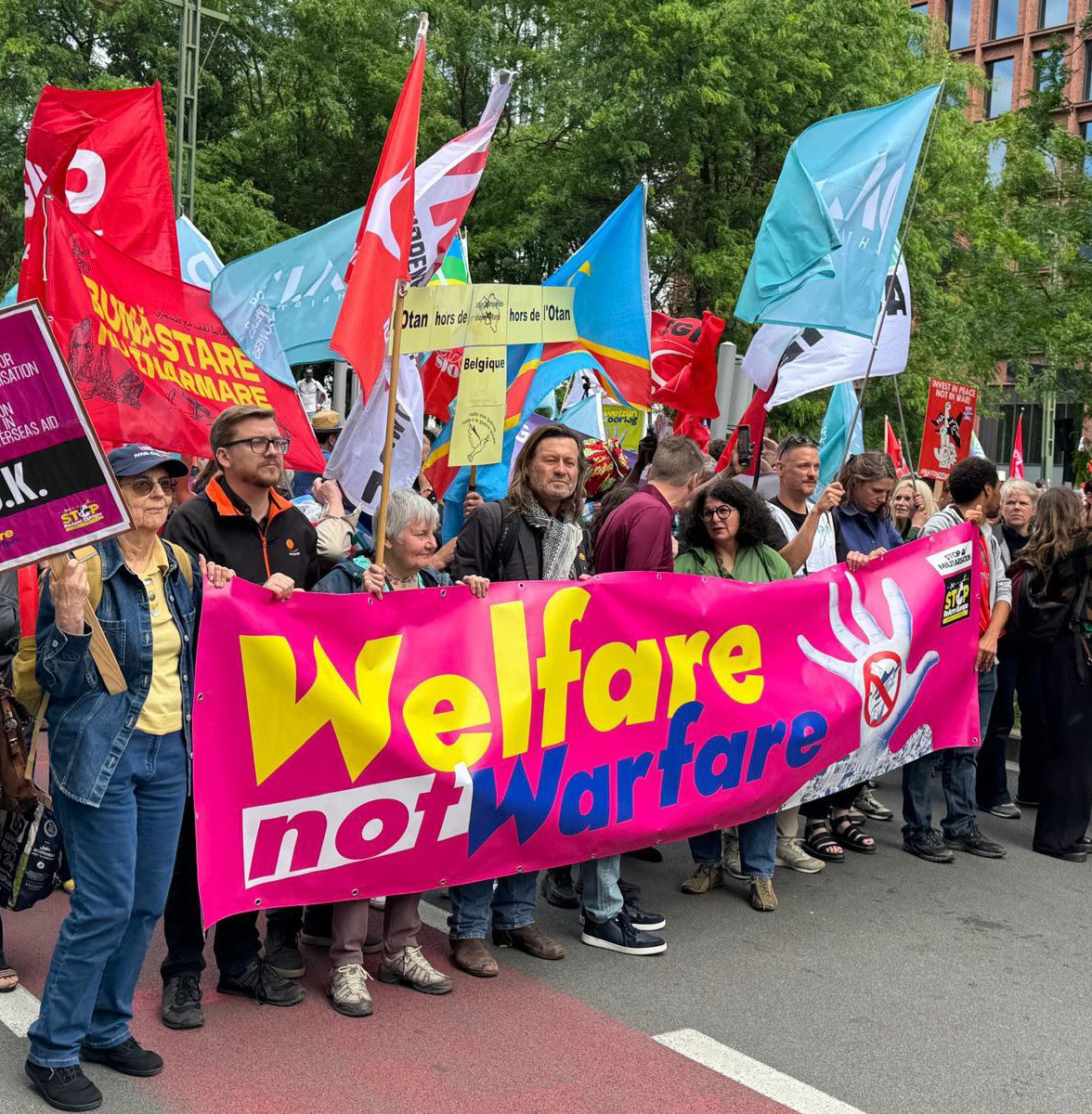
The rise of the far right today cannot therefore be separated from the economic and social developments of recent decades. It did not emerge in a vacuum. It grew where insecurity, inequality and a lack of trust in existing institutions reinforced one another.
That is why the fight against the far right is not only about confronting racist or nationalist ideas. It is also about rebuilding trust. Trust that work provides dignity. That economic progress is shared. That democratic institutions can protect people again.
Fighting the far right therefore means not only responding to the symptoms, but also tackling the conditions in which it can grow.
Social Consequences Today
The gap between rich and poor is greater than ever today. While millions of people struggle every month to pay their energy bills, rent or grocery costs, a small group of the super-rich accumulate fortunes that defy imagination. The figures have become so absurd that they almost lose their meaning. And that is precisely the problem: extreme wealth is not a natural phenomenon. It is the result of political choices.
Take Elon Musk. Shortly after SpaceX went public in 2026, his personal wealth was estimated at more than 1,000 billion dollars. That made him the first trillionaire in modern history. The figure is so vast that it exceeds any ordinary human scale.
If Musk spent 1 million dollars every day, he could continue doing so for almost 3,000 years without exhausting his fortune. His personal wealth is greater than the entire gross domestic product of almost 200 countries. Even entire national economies pale beside the wealth of a single individual.
Meanwhile, according to the World Bank, hundreds of millions of people worldwide live on less than 2 dollars a day.
The contrast becomes even more painful when we look at the everyday lives of ordinary people. A farmer in sub-Saharan Africa works from sunrise to sunset and still struggles to produce enough food to feed his family. Climate change, drought and rising food prices make survival increasingly difficult. While he calculates whether he can still afford seed for the next season, billionaires fly around the world in private jets that emit more CO in a single flight than an average family prod2uces in years.
According to Oxfam and ITUC-Africa, one in four people worldwide now face moderate or severe food insecurity, an increase of 42.6% since 2015. According to those organisations, this situation is not an unavoidable consequence of external circumstances, but the result of an economic system that places profit above human dignity. Low wages, insecure incomes, speculation on food prices, the displacement of local agriculture by agro-industrial companies, climate crises, conflicts and structural inequality disproportionately affect workers, women and children. The organisations therefore call for decent wages, strong social protection, support for small farmers and an end to food speculation.
Inequality is also growing closer to home. The middle class, once the backbone of our society, increasingly feels hollowed out. People work harder, longer and more flexibly than ever, yet have less left at the end of the month. Wages are nowhere near keeping pace with the cost of housing, energy, food and care. Young people with full-time jobs often cannot afford a home. Pensioners have to cut back on heating. Families postpone medical care because it has become too expensive.
At the same time, the wealth of the richest 1% has exploded over recent decades. According to Oxfam, almost two thirds of all new wealth created since the coronavirus crisis went to that richest 1%. While ordinary people lost jobs or saw their incomes fall during the pandemic, billionaires saw their fortunes grow even faster. The system therefore favours those who already own an enormous amount.
That is precisely why calls for tax justice are growing louder. Why is labour heavily taxed while enormous fortunes often contribute barely anything? Why does a worker pay tax on every euro earned while vast fortunes largely escape solidarity through financial constructions, capital gains and tax havens?
A tax on great wealth is not an attack on success. It is a matter of fairness. No one becomes a billionaire without making use of roads, infrastructure, education, healthcare and the labour of thousands of others. Wealth is never created in a vacuum. It is therefore only logical that those who benefit most from our society should also contribute most strongly to financing it.
A fair tax on large fortunes would allow governments to invest in public services, affordable care, quality education and social protection. It would mean nurses, dockers, drivers and warehouse workers no longer being asked to foot the bill time and again while the very largest fortunes remain untouched. More information on this initiative by Paul Magnette and Thomas Piketty is available at https://www.tax-the-rich.eu.
The real question is how long we can democratically accept a situation in which the super-rich remain untaxed and some people accumulate wealth larger than the budgets of entire states, while millions are unsure how they will pay their next energy bill or afford their next meal. Even democracies cannot bear this degree of inequality.