Working people in transport are blamed while those responsible for the system escape scrutiny. Yet transport workers themselves can be key to sustainable solutions.
That is why, as a trade union movement, we propose a different vision: transport as a lever for climate justice, not as the scapegoat of the transition.
Responsibility Is Structural, Not Individual
Truck drivers who lose their jobs because emissions standards are tightened: that is not climate policy, it is social dumping. An airport worker dismissed because aviation ‘has to shrink’, with no alternative or support: that is not a vision for the future, it is destructive policy.
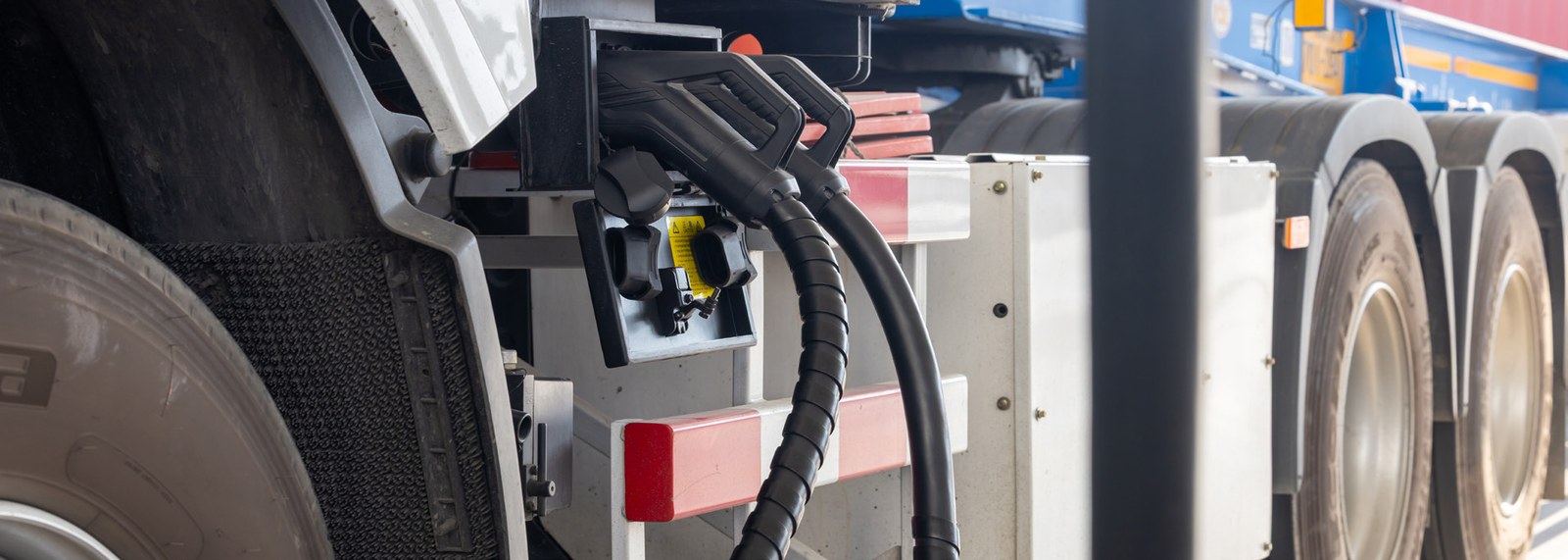
The people in the cab are not the ones who decide the route, yet they are the first to be penalised. We see this today, for example, in road freight. The necessary shift towards lower-emission vehicles requires huge investments from both companies and governments. That technological transition must not be used as an excuse to make workers pay the bill.
The move towards electric and more sustainable logistics systems must be accompanied by investment in infrastructure, training and quality employment. Otherwise, greening once again risks becoming a story of shifting social costs. And yes, investing in sustainability costs money. Transport companies will ultimately have to make those investments. That is why they need to charge the real cost of transport. If we want a just-in-time economy, we have to pay for it. If we want a parcel ordered online delivered tomorrow, that has a cost - especially if we want it delivered socially, without social dumping or exploitation, and sustainably, for example using electric or hydrogen-powered vehicles.
Transport emissions are the consequence of political choices, economic globalisation, just-in-time supply chains and profit maximisation. They are not the fault of working people doing their jobs.
Transport Is Also An Essential Service
Transport is not a luxury. It is the bloodstream of our society. Without transport, there is no food, no medicine and no functioning public life. So the question is not whether we need transport, but how we organise it.
That is precisely where the trade union alternative lies: invest in sustainable modes of transport, public transport, shorter supply chains and smart logistics. And do so with respect for the people who perform the work.
The same applies to aviation. The debate is often presented as a choice between flying and not flying, but reality is far more complex. Not every flight has the same social value. Is it really excessive to argue that those who can afford a private jet should also make a contribution through taxation?
Luxury flights and excessive air travel can rightly be scrutinised, but aviation remains essential for many regions and economic activities. Many Belgian companies exporting abroad do so through the national airport at Zaventem, including via night flights.
Calling that into question also means putting jobs at risk.
Investment in high-quality rail connections and other sustainable alternatives must therefore go hand in hand with social policy that gives aviation workers prospects rather than insecurity.
We want a sector that serves the planet rather than destroys it. But that requires political choices, public investment, businesses taking responsibility and social guarantees.
Greening Must Be Socially Governed
Greening transport requires enormous investment: in electrification, infrastructure, training and equipment. What is missing is a guaranteed social pillar. Without that social pillar, greening risks causing job losses with no alternative, more expensive access to mobility, worsening working conditions and further privatisation of mobility. Climate policy then ceases to be a tool for progress and becomes a source of new inequality.
Every euro of public support for greening should be linked to social conditions. No subsidies without collective agreements. No support without training. No public money for companies that simultaneously organise social dumping. The climate transition must never be financed with public money while workers’ rights are being eroded.
That is why we say: transport can be part of the solution if it is publicly governed and socially embedded.
The Transport Sector Is Not A Scapegoat, But A Key Player
If we want to tackle the climate crisis, we should not marginalise the transport sector, but transform it. Not punish it, but involve it. Not privatise it, but democratise it.
Transport workers are not part of the problem. They are part of the solution - provided they are allowed to help make decisions, are treated with respect and the transition is genuinely just.
More than ever: together. For climate justice with transport as an engine of change.