
Climate policy is not only about tonnes of emissions avoided or technological innovation. The social added value of new economic activities must carry equal weight. A climate job is not simply a job in a green sector. It is work that contributes to the collective interest, to a more sustainable society and to a better quality of life for workers and citizens. Ecological progress without social added value ultimately remains an incomplete transition.
For us, as a trade union movement, the stakes are clear: the climate transition must not become an instrument for social regression. It must become a lever for social progress.
What Does A 'just Transition' Really Mean?
For us, a just transition means that no worker is sacrificed in the name of climate targets: no job loss without prospects, no restructuring without social dialogue, no greening without redistribution of resources and power, and no vision of the future without actively involving workers. Climate policy can only be sustainable if its social dimension is sustainable too.
That requires more than good intentions. It requires guarantees. Those guarantees must also concern the quality of work itself. Too often, every job in a green sector is assumed automatically to be a good job. That is a dangerous illusion. Sustainable sectors too can involve insecurity, subcontracting, low wages and poor working conditions. A just transition therefore requires not only ecological targets, but also strong employment conditions, collective protection and full social rights. The move towards a climate-friendly economy must go hand in hand with strong collective agreements, sectoral collective bargaining and social protection for everyone working in these new sectors. A climate plan without a social chapter is not a plan. It is a threat.
A Real Transition Requires Redistribution
The climate transition will cost money. That is not a reason to postpone it, but it is a reason to decide who pays what. And
there is only one fair choice: those who pollute the most and earn the most should contribute the most.
Today, we often see the opposite. Workers in sectors such as energy, transport and industry are sacrificed in the name of ‘the green future’, while major polluters receive support with no conditions attached. That is not justice. It is class policy.
A just transition also requires fiscal redistribution: climate funds financed by capital, not labour; collective investment in green infrastructure, not privatisation; and respect for trade unions as full social partners at every stage.
Climate Jobs As An Answer, Not An Empty Promise
New technologies, new energy sources and new production processes will inevitably require different skills. Workers must not be left to fend for themselves. A climate strategy without a training strategy is bound to deepen social inequality. Workers need long-term prospects, with access to training, reskilling and career guidance that genuinely prepare them for the jobs of tomorrow.
We support climate jobs, but those jobs must offer the same social guarantees as the best jobs of today. That means stable contracts, good wages under collective agreements, a voice for workers and trade unions, high-quality training pathways with genuine employment prospects, and respect for the skills and craftsmanship workers have built up throughout their careers.
Worker and trade union participation is not a detail; it is a fundamental condition for success. Workers possess practical knowledge that is indispensable if the transition is to succeed. When climate policy is developed without involving workers and their unions, solutions that appear technically feasible often prove socially unsustainable. Democratic anchoring and social dialogue are therefore just as important as technological innovation.
Ultimately, every climate job must meet two conditions at the same time. It must contribute to society’s ecological objectives and improve the working conditions of the people doing the work. There can be no just climate transition if green technology is built on exploitation, insecurity or poor working conditions. Ecological and social progress must always go hand in hand.
And yes, it can be done. This is not a utopia. There are positive examples.
The climate transition is often presented as a technical or political story, but in reality it is workers inside companies who make it possible.
A series of testimonies in the February 2026 edition of MagMetal, the magazine of the Belgian metalworkers’ union ABVV-Metaal, shows how greening industry can create opportunities for employment, innovation and training, but also how crucial social dialogue remains if workers are to be brought along.
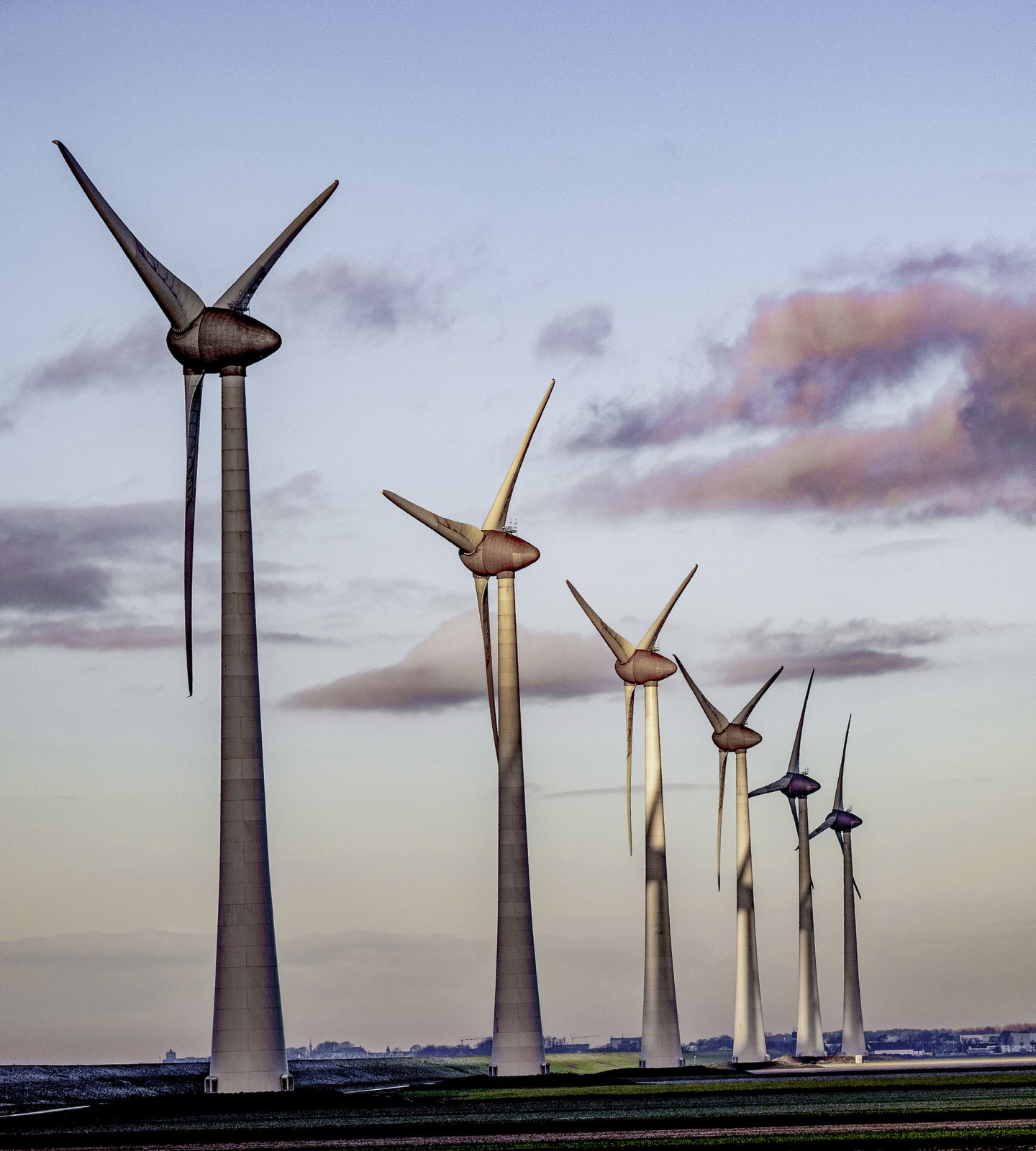
ZF Wind Power in Lommel produces gearboxes for wind turbines. In a feature on the industry of tomorrow, chief union representative Gwen Flemings explains how the company is directly connected to the expansion of renewable energy. Workers see every day how their work contributes to the production of wind energy. At the same time, she stresses that investment in technology must go hand in hand with investment in people, training and sound social dialogue.
At Atlas Copco in Wilrijk, workers manufacture compressors and industrial systems that are becoming increasingly energy-efficient. Chief union representative Sacha Cornelis points out that innovation and sustainability are becoming ever more important factors in competition. Greening industrial processes creates new markets, but it also requires continuous training so workers can keep pace with new technologies.
In the same February 2026 edition of MagMetal, chief union representative Carlo Van Aerschot of Duracell explains that the Aarschot plant is exploring how it can produce new types of batteries. Battery technology plays a key role in the energy transition and electrification.
According to Van Aerschot, workers’ experience and professional knowledge are major assets when launching new sustainable production processes.
The central message from these testimonies is that workers are not the problem in the climate transition; they are its driving force. The union activists involved argue for a social climate policy in which investment in greening goes hand in hand with job security, training and worker participation. The common thread is clear: greening can only succeed if workers are involved, receive training and help shape the industry of tomorrow through strong social dialogue.
The green future must also be social, democratic and just.
The transition to a climate-neutral society is inevitable. But how we get there is a choice: a political, social and trade union choice.
For us, that choice is clear. We say yes to change and yes to a better future, but only if that future is social, democratic and just. No greenwashing, and no social dumping painted green.
More than ever: together. For real climate jobs. For a just transition that leaves no one behind.