We can only play that role if we put down deeper roots while widening our reach: closer contact with our members and broader connections through global solidarity. Only then will we remain relevant, and only then will we make a difference.
Back To Basics - And Forward
Being closer to members means being present in the workplace. Listening, organising and protecting. In the port, on the road or in the warehouse. But also in apps, on social media, in schools and in neighbourhoods.
That requires strong local roots through activists and representatives who remain close to the workplace. It means investing in young trade union leaders, in modern digital communication and in transparent information that reaches workers quickly.
Campaigns must start from people’s concrete concerns, not from abstract policy papers. Trade union services must remain accessible, efficient and human, without drowning in bureaucracy. Only then will the union remain an organisation workers feel belongs to them and works for them.
The trade union of tomorrow must feel like something that belongs to workers, not something that talks about them.
International Strength As A Buffer Against Powerlessness
At the same time, we must dare to think more broadly. Anyone who believes trade union work ends at the border will be overwhelmed by global forces: Uber, Amazon, Ryanair, Maersk, SHEIN; the international division of labour; trade agreements; global supply chains.
Our defence lies in international structures: the ITF, ETF, ILO, ETUC and ITUC. But it also lies in cross-border solidarity between workers themselves, joint campaigns and coordinated action - in a global voice that says: this is the floor below which no one may fall. One strong union in one country can achieve only so much. A connected trade union movement can achieve everything.
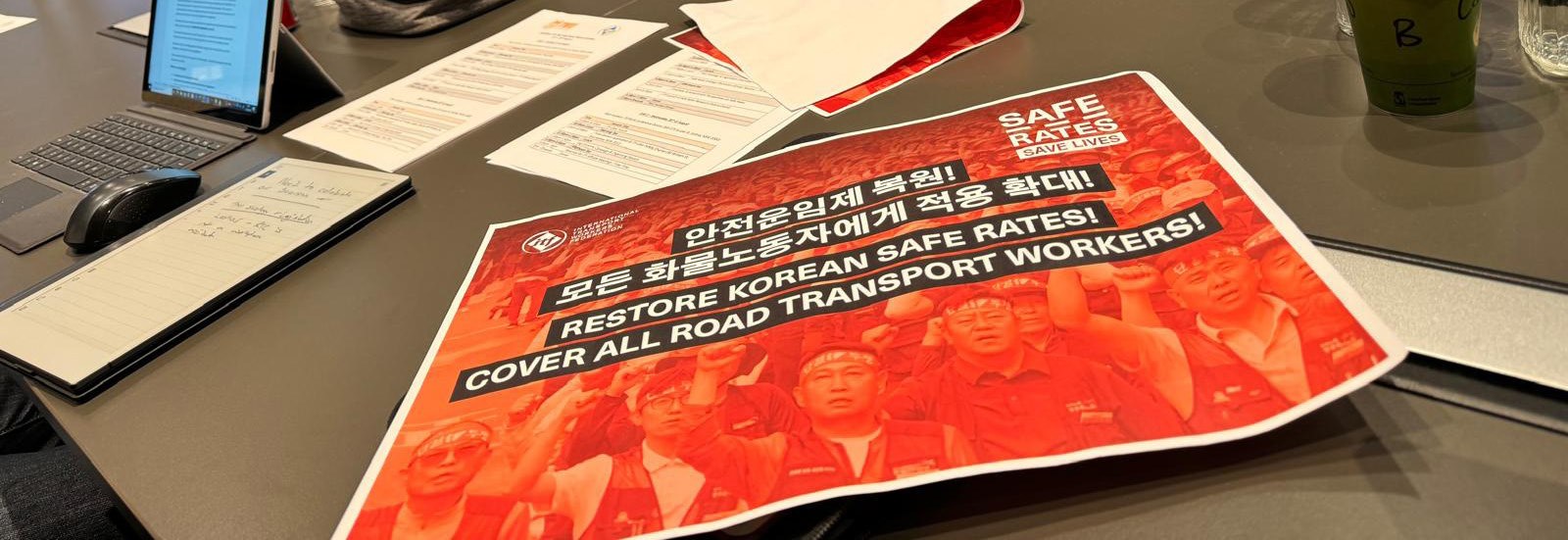
One strong example of an international campaign is the ITF’s Safe Rates Save Lives campaign. Road transport is a sector of brutally intense competition, with business models based on extreme subcontracting, cost-cutting and even illegal practices all over the world. Drivers everywhere are pushed to work excessively long hours, drive while fatigued and overload their vehicles, endangering not only their own safety but that of other road users as well.
The global Safe Rates Save Lives campaign aims to introduce fair and safe standards. Fair pricing is the way to reverse this situation and create a safe and sustainable sector with fair wages and working conditions for transport workers.
Seventy trade unions in 48 countries have now rolled out the campaign, and the number of participating unions continues to grow across continents.
A few years ago, the European Transport Workers’ Federation launched a similar initiative. Its Fair Transport campaign was rolled out not only in road transport, but across all transport sectors and all European countries. It included sector-specific demands as well as broader ones: the right to strike, an end to privatisation and exploitation, an end to workplace violence and more. Almost 193,000 signatures were collected in support of the campaign.
The Trade Union Future Is Both Political And Social
We cannot afford to pretend to be neutral. A trade union is, by definition, a political actor - not party-political, but driven by values. We choose democracy, equality and solidarity. That is why we speak out on racism, climate, inequality, war and peace.
Let Old Forms And Old Thinking Die
The workplace is undergoing fundamental change. The introduction of artificial intelligence, algorithmic management and platform work is profoundly transforming transport. Large companies are being broken up into complex subcontracting structures, permanent contracts are giving way to temporary, flexible or precarious work, and more and more workers are isolated, mobile or digitally managed.
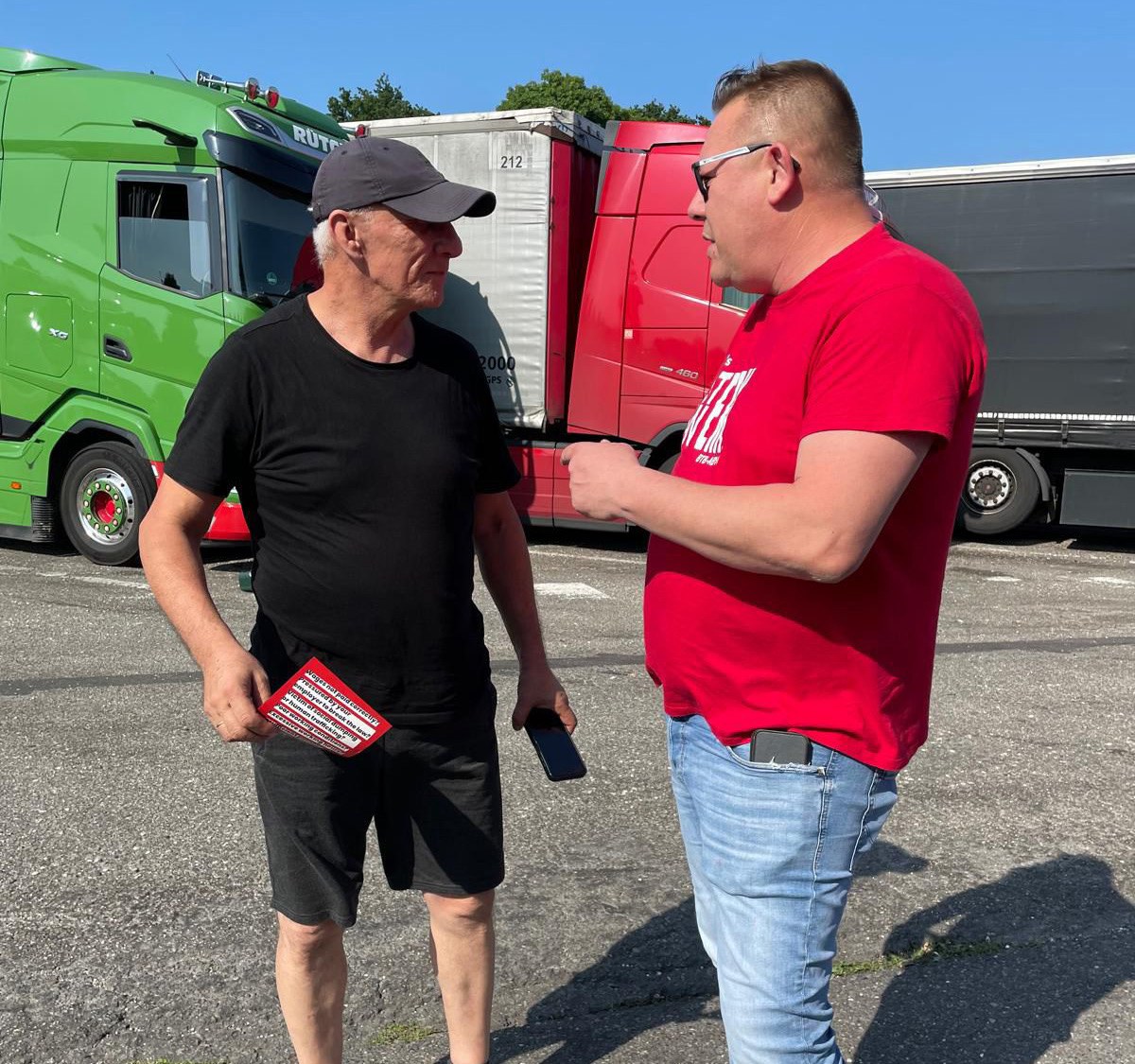
This also means trade unions must rethink how they operate. Traditional union models based on large, fixed workplaces and stable employment relationships are no longer sufficient everywhere. If we want new groups of workers to organise, we must also develop new forms of trade union presence and action. The roadshows organised by the Belgian transport union BTB are an interesting example. Instead of waiting for workers to come to the union, we actively go to car parks, logistics hubs and workplaces to make direct contact with drivers and mobile workers. This is crucial in a sector where many workers work in isolation, are constantly on the move and are often difficult to reach through traditional union structures.
In its research, the European Trade Union Institute (ETUI) points to initiatives like these as examples of innovative forms of trade union organising in a changing labour market. Unions that remain visibly present in the places where work is changing increase not only their reach, but also their relevance.
Such initiatives show that unions can adapt to new economic realities without abandoning their core values. Solidarity remains the same. But the ways in which we organise, inform and mobilise workers will have to evolve with the world of work itself. If platform companies, algorithms and multinationals are constantly reinventing themselves, the trade union movement must continue to innovate too if it is to make workers collectively stronger.
A second major challenge is organising entirely new groups of workers whom traditional union structures barely reach. Platform workers, food couriers, app-managed drivers and other digital workers often sit outside traditional employment relationships. They work in isolation, flexibly and under permanent algorithmic control.
Yet trade unions around the world are proving that these workers too can organise collectively. In Australia, the Transport Workers’ Union (TWU) has played a pioneering role. As noted earlier, it has reached agreements with platform companies such as Uber Eats and DoorDash to secure minimum payments, safer working conditions and greater protection for platform workers.
Such agreements show that platform work does not have to remain a ‘lawless zone’ where technology companies can evade social responsibility.
Digital workers too have the right to collective representation, social dialogue and protection from exploitation.
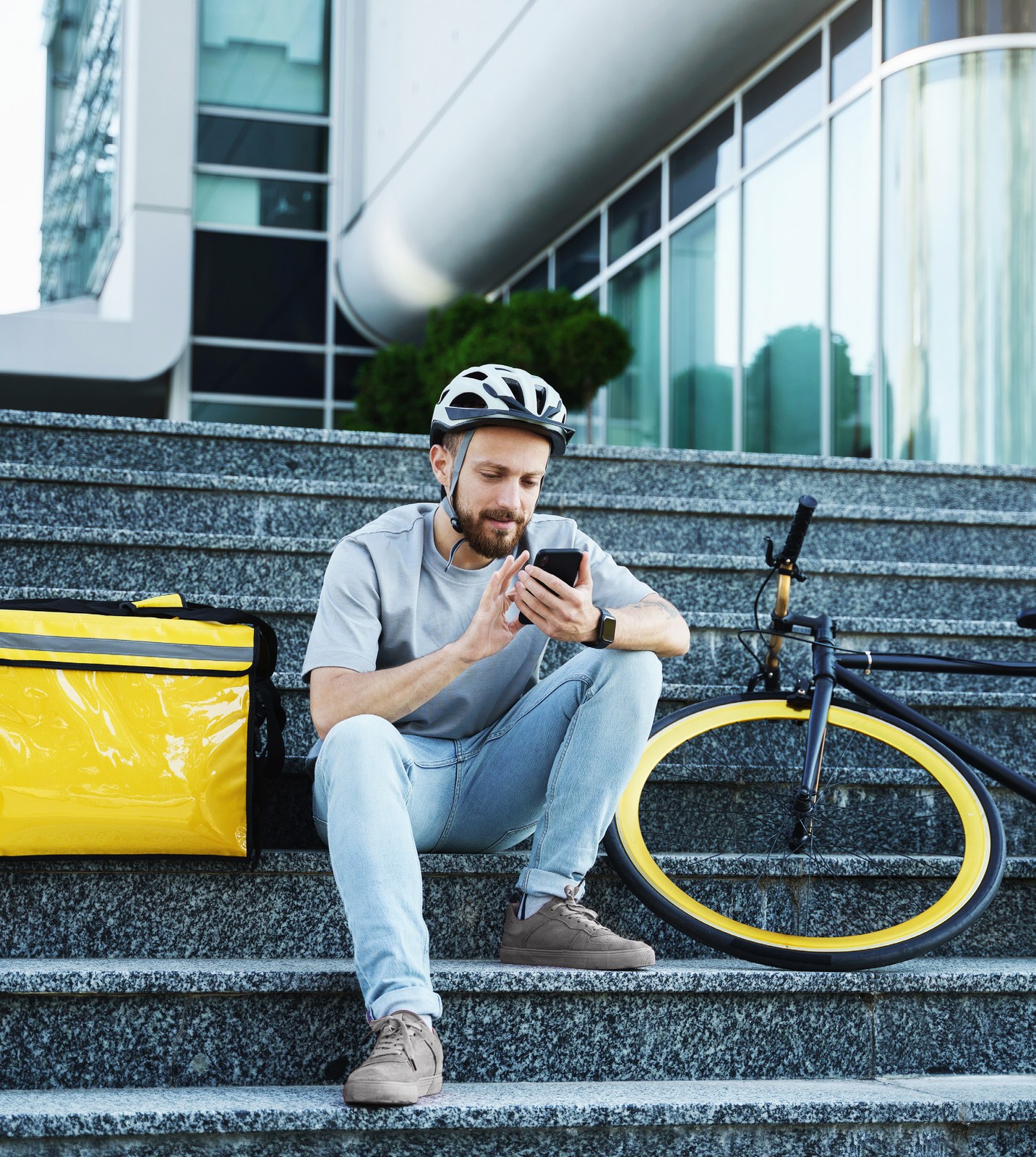
At the same time, this makes clear that unions must broaden their traditional working methods. Workers directed through apps or algorithms often no longer meet in a traditional workplace. Organising therefore increasingly means being present on digital platforms, social media, car parks, distribution points and other new meeting places of work.
The essence of trade union work does not change: making workers collectively stronger in the face of economic power. But the forms through which we organise solidarity will have to evolve with the changing world of work.
Another striking example of trade union innovation comes from the Maritime Union of Australia (MUA). Thousands of workers in the international cruise industry work under complex international arrangements, often beyond the reach of national labour inspectorates and with limited access to trade unions. Workers spend months at sea, work under foreign flags and are often employed in highly precarious conditions.
To reach these workers, the MUA developed new and creative organising methods. Trade unionists went undercover on cruise ships as ordinary passengers so they could make direct contact with crew members, gather information and inform workers about their rights. It shows just how much the world of work has changed: traditional union presence at one fixed workplace is increasingly insufficient in a globalised economy.
The confrontation with Carnival Cruises in Australia made this tension particularly visible. Together with the New South Wales labour inspectorate, the MUA assisted with a safety inspection of the Carnival Adventure. According to the union, Carnival tried to avoid Australian labour and safety law even though the ship operated commercially from Australian ports. When inspectors and trade union representatives were denied access, a broad debate emerged about labour rights, safety and oversight in the international cruise industry.
The case shows how multinational companies often operate in legal grey zones today, using international structures to circumvent social protection and labour inspection. At the same time, it shows how unions are adapting and developing new strategies to reach workers who were once almost invisible.
All of this also demands a different way of communicating. Too often, trade unions assume their achievements speak for themselves. But in a world dominated by social media, short news cycles and a permanent flow of information, visibility has become a strategic necessity.
Unions will need to invest much more in storytelling, recognisable public figures, podcasts, digital platforms and new forms of public engagement. Not to sell themselves as a brand, but to make visible again what collective action actually delivers for workers. A victory nobody knows about rarely changes the public debate.
The trade union of tomorrow will be organised differently from the union of yesterday: more digital, more diverse and more international. But its core mission remains the same as it was a hundred years ago: bringing together people who are weak on their own, but can be strong collectively.
The trade union of tomorrow will not stay silent on migration, women’s rights or digital exploitation. And we certainly will not stay silent when democracy and social rights come under pressure. Solidarity changes form, but never meaning.
Ten Characteristics Of The Trade Union Of Tomorrow
MEMBER-DRIVEN active networks of trade union activists.
DIVERSE women, young people and migrants in leadership.
DIGITALLY CAPABLE modern communication and online organising.
EDUCATIONAL training, learning and political awareness.
INTERNATIONAL campaigns and solidarity across borders.
CONNECTING coalitions with citizens' movements and NGOs.
VISIONARY positive visions of the future.
VALUES-DRIVEN no neutrality in times of crisis.
FIGHTING do not wait - organise and demand.
HOPEFUL countervailing power with perspective and humanity.
We Build The Trade Union Of Tomorrow Today
If we want to remain relevant, we must dare to change. Not to deny who we are, but to remain true to our core: defending dignity at work, justice in society and solidarity as a strategy. That requires courage, organisation and vision. Above all, it requires the belief that change is possible - and the understanding that if we do not do it, no one will.
More than ever: together. For a trade union that is not a relic, but an engine of the future.