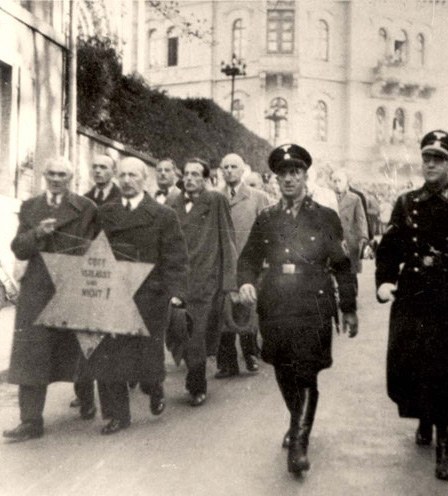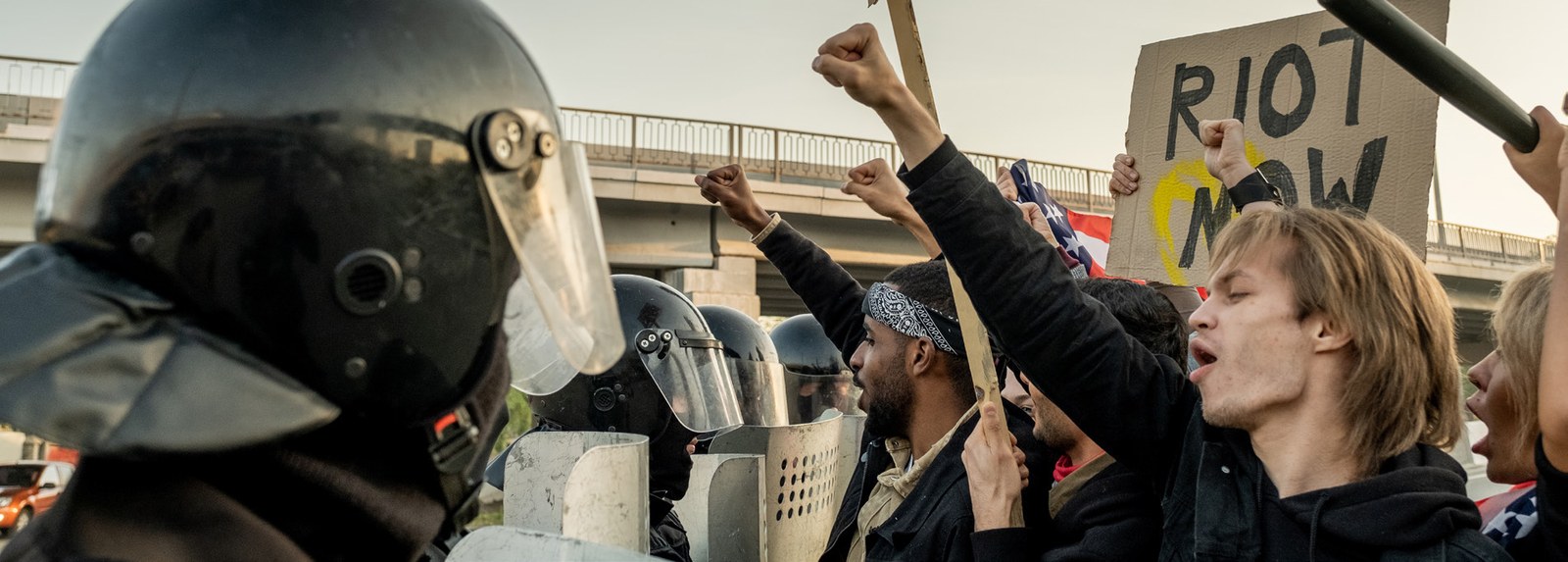
From Donald Trump in the United States to the AfD in Germany. From Giorgia Meloni in Italy, Marine Le Pen in France and Geert Wilders in the Netherlands to Javier Milei in Argentina. The far right is no longer a fringe phenomenon. It governs countries, influences legislation and shapes media debate. It shifts the norm, pushes the boundaries of what can be said and makes antisocial policies discussable again.
The far right influences legislation and shapes media debate. It shifts the norm, pushes the boundaries of what can be said and makes antisocial policies discussable again.
The Far Right Does Not Grow In A Vacuum
The rise of the far right is neither a coincidence nor an innocent response to ‘citizens’ concerns’. It is the result of organised discontent, political cynicism and economic mismanagement that offers no hope.
Nor has the rise of the far right come out of nowhere. Across Europe, the distance between traditional social-democratic parties and their historic constituencies has grown. In their search for governability, those parties often adopted parts of the neoliberal economic discourse. The so-called Third Way of Blair and others not only alienated working people from social democracy; it drove some of them into the arms of the far right.
As wages came under pressure, the cost of living rose and industrial insecurity increased, many workers felt increasingly less represented by the parties that had once been their natural allies. That is more than worrying.
Yes, people feel insecure because of inequality, migration, inflation and change. But the far right uses those feelings to organise hatred. Not to provide solutions, but to create enemies. Not to share power, but to seize it.
Far-right movements consistently turn against everything that emancipates people: women’s rights, LGBTQ+ rights, migrants’ rights, trade union rights, the right to collective action, the right to a dignified life and to die with dignity. And they do so under the banner of ‘the voice of the people’.
Far-right parties like to present themselves as defenders of the ‘ordinary man’. But behind that rhetoric often lies a very different reality. When minimum wages, social security, wage indexation or collective protection are at stake, those same parties strikingly often vote against measures that strengthen workers’ purchasing power and social position. The contrast between their rhetoric and their voting record is often considerable. This is particularly clear in the European Parliament, where the far-right Vlaams Belang voted against the directive on adequate minimum wages.
The far right is also growing in an increasingly polarised society. While a small economic elite continues to increase its wealth and power, more and more people feel insecure about their future. Workers see their purchasing power under pressure, jobs becoming more flexible and less secure, social protection being dismantled and the gap between rich and poor continuing to widen. That insecurity leads to frustration, anger and sometimes even despair.
Instead of addressing that structural inequality, the far right directs attention towards scapegoats. Migrants, trade unions, international institutions or people who think differently are blamed for problems that in reality stem from an economic model that puts profit before people.
Migration is systematically presented as the cause of social problems and insecurity. But migration does not have to be a problem. Consider social dumping. Social dumping does not arise because people migrate. It arises when employers and governments allow workers to be played off against one another through underpayment, bogus self-employment, exploitation and a lack of enforcement. Political choices undermine working conditions by weakening social protection and labour inspection, not migration itself.
Social dumping, the erosion of labour rights, permanent pressure on wages and even international conflicts are not accidents.
They are symptoms of a system in which the interests of the happy few increasingly take precedence over those of ordinary people.
A Mask For Capital
The far right presents itself as the ally of ‘the ordinary man’. But that pose invariably falls apart as soon as it gains government power. Look at the facts:
In Hungary, Viktor Orbán introduced the 'slave law', allowing employers to impose up to 400 hours of overtime a year, with payment spread over three years. Trade union protest was met with intimidation.
The Meloni government in Italy increasingly presents social unrest not as a sign of social problems, but as a threat to public order. This leads to tougher measures against activists and a political culture in which protest is criminalised more quickly than it is heard.
In France, Le Pen votes against measures that strengthen wage fairness, gender equality or collective bargaining. We recently saw, for example, how the mayor of Hénin-Beaumont temporarily suspended two trade unionists and removed them from public service. The far-right RN mayor took that decision against the advice of the disciplinary council. It illustrates how the far right treats trade unions once it is in power.
Everywhere, the far right preaches law and order: tougher sentences and immediate punishment. Yet when Marine Le Pen is convicted of misuse of public funds, she continues to receive support, even though for years she herself had argued that politicians with a criminal record should not be eligible for election.
In Germany, the AfD blocks proposals to raise the minimum wage while blaming migrants for social dumping organised by employers. The AfD demands that Russian be taught in schools in one federal state and calls for better relations with Putin.
In Turkey, we see the same logic translated into direct repression of trade unions and social opposition. Trade union activists have been prosecuted, arrested or legally intimidated because of their union activities. International trade union organisations such as the ITUC, ETUC, ITF and ETF have repeatedly campaigned against the persecution of Turkish trade unionists and warned about the systematic dismantling of fundamental democratic rights under Recep Tayyip Erdoğan's regime.
In the United States, Donald Trump explicitly dismissed union-friendly members of the National Labor Relations Board (NLRB), once again giving employers greater room to manoeuvre at the expense of collective rights. At the same time, trade unions in federal public services were systematically weakened through executive orders that restricted collective bargaining and made trade union representation more difficult. The contrast with the Biden administration could hardly have been greater. Under President Biden, trade unions once again received greater political recognition and support. He spoke openly in favour of collective bargaining, supported union organising at major companies and appointed more union-friendly figures to labour-policy positions. It was the first time in decades that a US president had explicitly presented himself as 'pro-union'. In September 2023, this was symbolised by his visit to the United Auto Workers picket line in Michigan during their action against General Motors, Ford and Stellantis (Chrysler). At the same time, so-called 'right-to-work' legislation remains in force in many Republican states. Behind that seemingly positive name lies a system deliberately designed to weaken trade unions by undermining collective solidarity financially and organisationally. In practice, those laws make collective bargaining more difficult, weaken workers' position and strengthen employer power. It shows how the struggle over labour rights in the United States has become not only economic, but ideological and political as well.
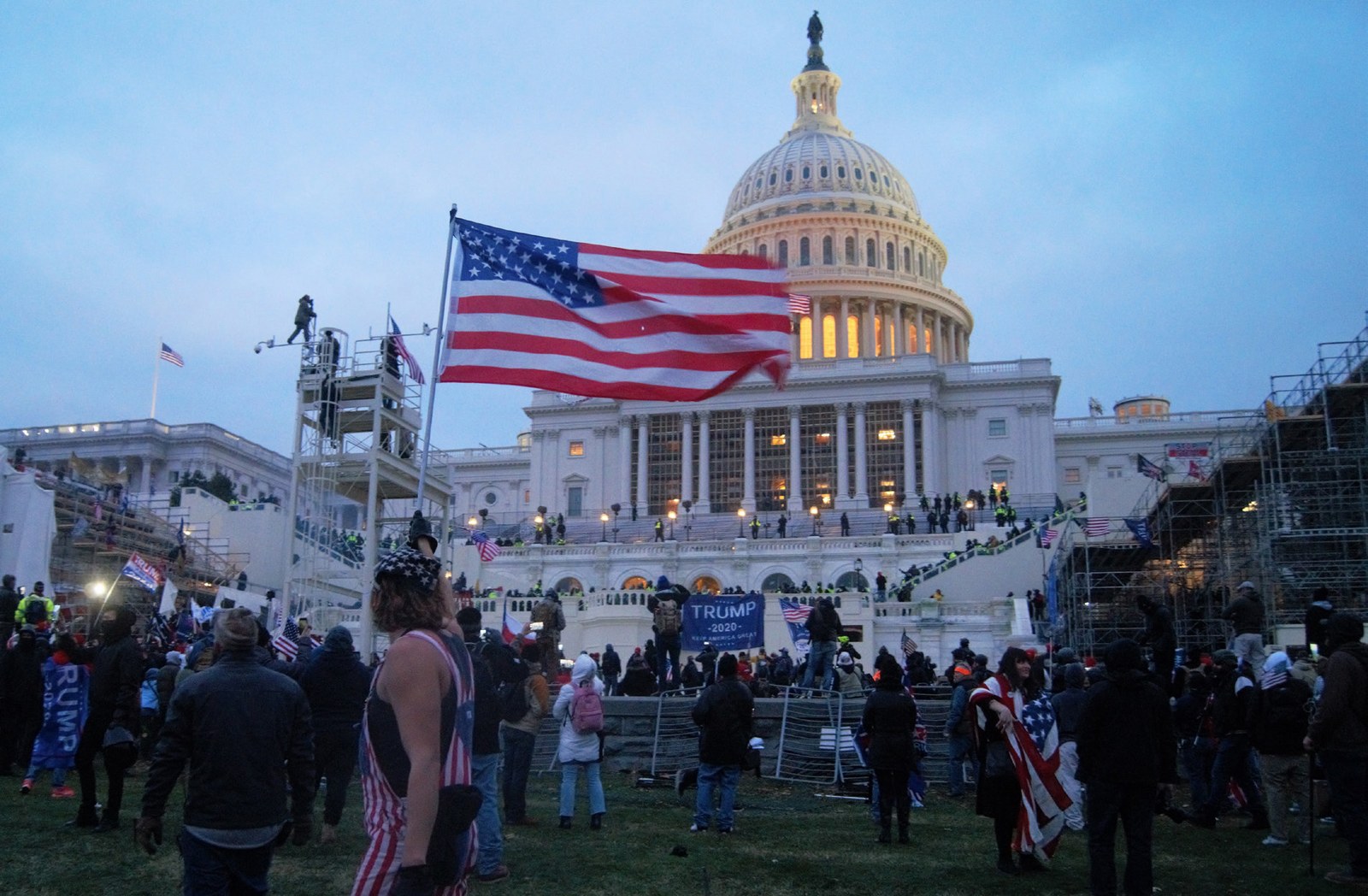
The storming of the Capitol: the day democracy bled. I will never forget 6 January 2021. The images of an angry mob besieging the Capitol will remain etched in my memory forever. It was not simply a protest; it was an attack on the heart of our democracy. For the first time in modern American history, the heart of the legislature, the symbol of freedom and justice, was physically overrun by far-right insurrectionists, stirred up by the lies of a sitting president who refused to accept his electoral defeat. The facts are stark: five people died and more than 140 were injured, including police officers who risked their lives to defend the institution. The damage ran into the millions. But the real shock lay in the symbolism. This was not a dictatorship on the other side of the world. This was America, a country that sees itself as a cradle of democracy. Yet within a few hours it became clear just how vulnerable that system is, how quickly its foundations can buckle under violence, hatred and disinformation. That day was a wake-up call for me. If it can happen there, it can happen anywhere. Democracy cannot be taken for granted. It is fragile, and we have to defend it every single day.
What these parties do is classic: they direct the anger of the working class not towards shareholders, speculators, tax avoiders or the dismantling of social protection, but towards migrants, women and trade unions. They do not serve the people; they protect capital.
The Creeping Threat Of Normalisation
The greatest danger is not that the far right shouts loudly. The greatest danger is that others begin to follow its narrative.
When traditional parties, the media and even employers’ organisations adopt parts of that discourse - on migration, on ‘law and order’, on rolling back social protection - they normalise the far-right worldview step by step. Ideas that were once unacceptable suddenly become open for discussion. The boundaries shift gradually until no one can remember exactly where the red line used to be.
That discourse often comes with a strong emphasis on security, control and national identity. At first sight, this may appeal to people who feel insecure, but behind that promise of security often lies a weakening of precisely the democratic institutions that protect citizens: an independent judiciary, a free press, trade unions and the right to protest. What is presented as protection of society therefore regularly ends up restricting fundamental freedoms.
This also requires clarity within our own organisations. We can understand the frustrations and insecurities that drive people towards the far right. We must keep talking to workers who feel abandoned.
But there is a line. Trade unionism is based on solidarity, equality and collective emancipation. That is fundamentally incompatible with organisations and movements that preach division, exclusion and hatred. Trade union activism can never go hand in hand with activism for the far right.
In Belgium, the cordon sanitaire is an important democratic barrier against the normalisation of the far right. Not because ideas should be banned, but because democratic parties have a responsibility towards history. Those who undermine the foundations of solidarity, human rights and the democratic rule of law must never be treated as a ‘normal’ political partner.
That is why the commitment of initiatives such as the 8 May Coalition is so important. 8 May, the day of victory over fascism in Europe, must not become a forgotten historical date. It is both a warning and a responsibility. The fight against the far right is not only about elections, but also about collective memory, democratic vigilance and social mobilisation.
The call to make 8 May an official public holiday again, in Belgium and by extension internationally, is not symbolic nostalgia.
It is a deliberate political signal that democracy, solidarity and anti-fascism must be actively defended, generation after generation.
The Far Right's Digital Megaphone
Political parties and traditional media are not the only forces normalising the far right today. Increasingly, digital platforms act as amplifiers for hatred, conspiracy theories and division.
Social media are often presented as neutral technology. In reality, algorithms determine which messages people see and which voices are amplified. That makes digital platforms political actors.
The most striking example is X, formerly Twitter. Since Elon Musk’s takeover, moderation policies have been drastically scaled back, previously banned far-right figures have returned and radical identitarian networks have gained a far wider reach. Researchers point out that X is consequently functioning more and more as an ideological megaphone for far-right ideas, in which migration is systematically linked to crime, violence and social decline.
Figures such as Martin Sellner in Austria, Tommy Robinson in the United Kingdom and Dries Van Langenhove in Belgium deliberately use this infrastructure to normalise ideas such as the ‘great replacement’, ‘remigration’, mass deportations and ethnic nationalism step by step. Their goal is not only to win elections, but also to shift the public debate. What seemed unthinkable yesterday is meant to become self-evident tomorrow.
This process once again confirms an old lesson from history:
authoritarian movements do not only try to capture institutions. They also try to change culture, language and public opinion.
Today, that struggle is taking place not only in parliaments, but also in algorithms.