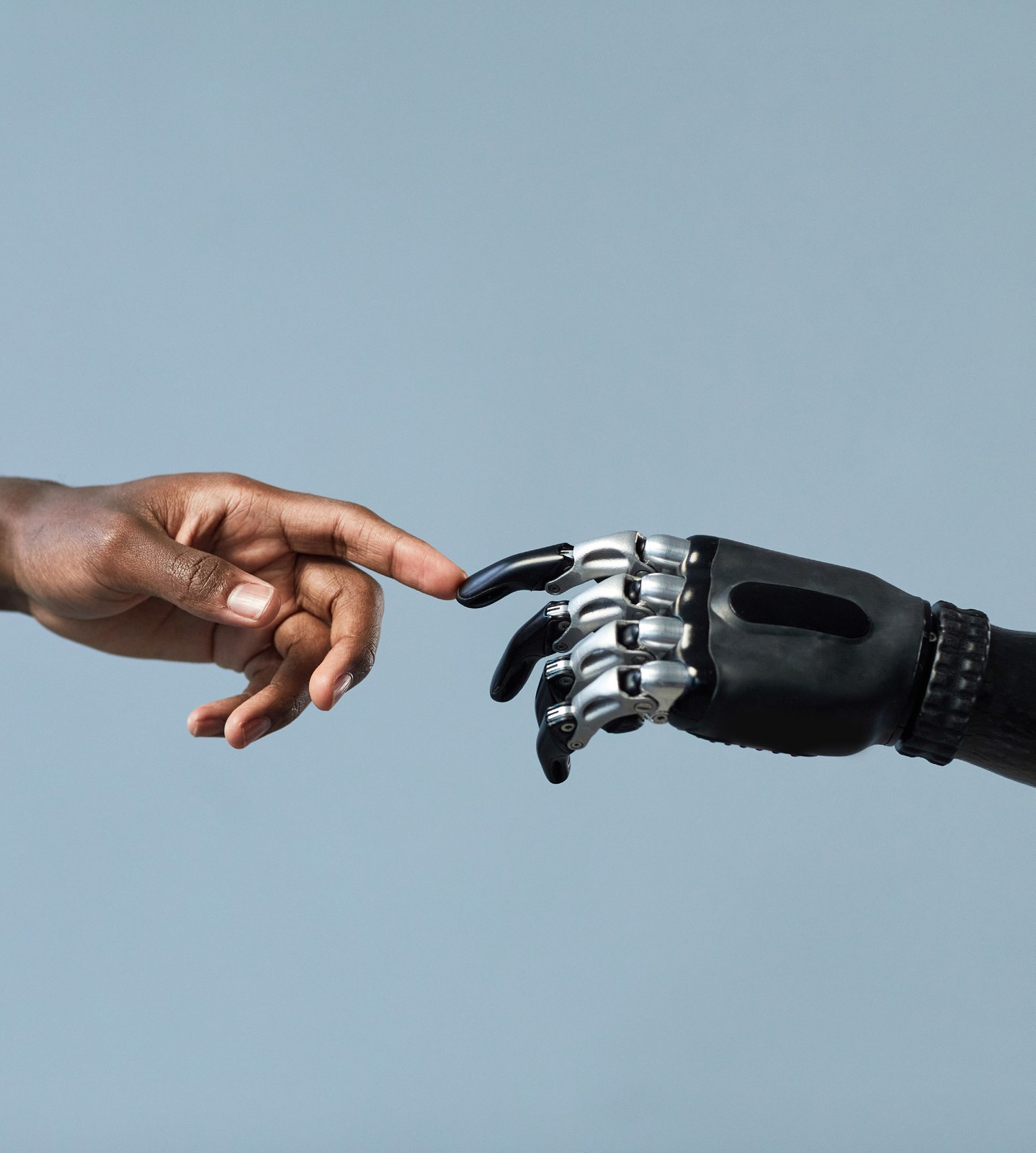
Because who decides what the algorithm decides?
From Algorithm To Authority
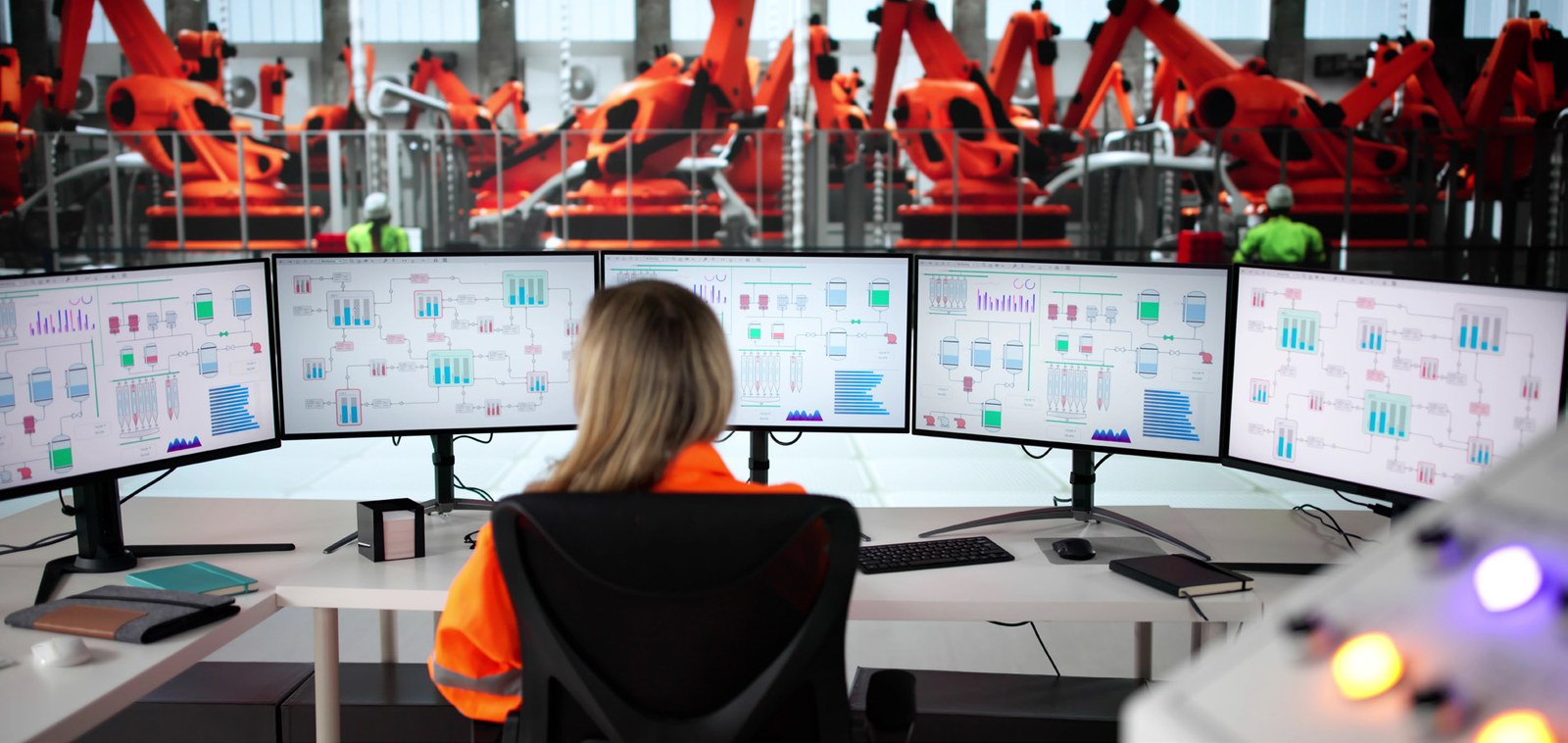
In more and more workplaces, workers receive their instructions not from a person but from an app. The app tells you when you work, how much you earn and how well you ‘perform’. Your boss has become invisible, yet is everywhere.
That is the new relationship of authority: non-negotiable, unreachable and opaque.
And that is precisely what makes it so dangerous.
The app pretends to be neutral, but in reality it is an extension of management power. An algorithmic order is still an order.
AI is therefore not only taking over tasks. It is rewriting authority, and it is doing so without challenge.
'black Box Management'
One of the biggest problems with AI at work is the lack of transparency. How is your score determined? Why did you not get a shift today? Why did you receive a lower rating?
Most of the time, the answer is: ‘The system knows.’ But a system with no accountability, no human point of contact and no possibility of appeal is not progress. It is regression.
In such an environment, collective rights become invisible. You cannot bargain with an algorithm. You cannot conclude a collective agreement with an app. Unless trade unions intervene, the foundations of labour relations disappear into a digital fog.
Transparency must therefore become one of the fundamental rights in a digital working environment. Workers have the right to know how algorithms function when they assess performance, organise work or influence income. An assessment that affects a career, pay or job security must never be based on a system whose conclusions no one understands.
There must also always be a possibility to challenge decisions. When an algorithm gives a worker a lower score, denies them assignments or excludes them from work, human intervention must be possible. Digital systems must never function as infallible judges with no right of appeal. The right to object and to human oversight is not a technological luxury; it is a fundamental labour right.
The international importance of those principles was confirmed again in 2026 when the International Labour Organization adopted a new Convention C193 on decent work in the platform economy. For the first time, global agreements were reached on transparency in algorithmic management, social protection, collective rights and human oversight of digital decision-making. In doing so, the international community explicitly recognised that platform work is real work and that technological innovation must never be used as an excuse to erode fundamental labour rights.
The task now is to secure rapid and broad ratification of Convention C193 by as many countries as possible.
National trade unions will need to lobby their respective governments. Even more important, of course, is ensuring that every element of the Convention is actually implemented, monitored in practice and that violations are sanctioned.
AI As A Divide-and-rule Instrument
Employers use AI not only to organise, but also to divide. Those who score as more ‘efficient’ receive more assignments. Those judged ‘too slow’ are scheduled less often. Colleagues become competitors, workloads increase and solidarity weakens.
The algorithmic workplace is essentially an individualisation machine. It removes people from their collective context and judges them solely on output, without taking account of circumstances, experience or humanity.
That reinforces existing inequalities: women are penalised for interruptions related to care, migrants for their language use and older workers because they adapt more slowly to digital tools. Discrimination does not disappear; it is hidden behind code.
That makes it all the more important that the introduction of AI systems is not considered solely in terms of efficiency or cost reduction. Before such systems are rolled out, their impact on employment, working conditions, discrimination and social protection must be assessed.
What is technically possible is not automatically socially desirable.
When Artificial Intelligence Enters Public Services
Palantir Technologies was founded in 2003 with financial backing from the American venture capitalist Peter Thiel and initially developed software for US intelligence and security services.
The company became known through its cooperation with the CIA, the NSA, the Pentagon and later the US immigration agency ICE. The latter relationship in particular is highly controversial. Human rights organisations accuse ICE of using Palantir software to track, locate and deport migrants, often through extensive linking of data across different databases. Critics therefore see Palantir not as a neutral technology company, but as one that actively contributes to repressive state practices.
When Britain’s National Health Service (NHS) awarded Palantir a contract worth around £330 million in 2023 for the so-called Federated Data Platform, resistance emerged immediately among medical associations, privacy organisations and several politicians, including Jeremy Corbyn. The platform’s stated purpose is to improve the management of patient data, hospital capacity and waiting lists. Supporters argue that it will allow the NHS to plan more effectively and provide care more quickly.
Corbyn and his allies raise fundamental objections. Their first concern is public trust. Health data are among the most sensitive personal data that exist.
Even if Palantir does not formally become the owner of those data, critics fear that concentrating enormous amounts of medical information in systems managed by a private company creates risks that are difficult to control fully. The issue is not only the possibility of data leaks, but also what kinds of analysis can be carried out and what commercial or political interests may come into play over time.
A second argument concerns democratic control. When a public health service becomes dependent on complex technology managed by only a small number of private suppliers, a form of technological dependency arises. Critics speak of vendor lock-in: once a system is deeply integrated into the NHS, changing supplier later becomes exceptionally difficult and expensive. Power then shifts from democratically controlled institutions towards private technology companies.
Peter Thiel himself also plays an important role in the criticism. Thiel is known as an outspoken libertarian billionaire who is openly sceptical of trade unions, public services and certain democratic institutions. For Corbyn, Palantir therefore represents not only a technological risk, but an ideological choice: the growing influence of Silicon Valley companies over the organisation of public services.
From Corbyn’s perspective, the problem is therefore not simply that Palantir has a controversial reputation. His fundamental objection is that a public health service must remain based on public control, public accountability and public trust. When a company closely intertwined with military, security and immigration enforcement gains access to the digital infrastructure of healthcare, he fears those principles will come under pressure. This explains why his campaign against Palantir resonates with trade unions, privacy activists and supporters of strong public services.

Jeremy Corbyn’s opposition to Palantir in the British NHS therefore goes far beyond a debate about a software contract. It touches on fundamental questions of privacy, democratic control, the commercialisation of public services and the influence of powerful technology companies over government policy.
The Dutch childcare benefits scandal also demonstrated the dangers of artificial intelligence in public services. It was one of the biggest administrative scandals in recent Dutch history. Between approximately 2005 and 2019, tens of thousands of parents were wrongly identified by the tax authorities as potential fraudsters in relation to childcare benefits. A major cause was the use of flawed and discriminatory risk models in which historical data, administrative characteristics and even personal data such as dual nationality were used to classify files as ‘high risk’.
The data models were not neutral. They contained false assumptions, reinforced existing prejudices and caused innocent citizens to be systematically drawn into an anti-fraud regime. Combined with an extremely strict repayment policy, many parents were then required to repay all the benefits they had received, often with devastating financial and social consequences. The scandal ultimately led to the resignation of the third Rutte government in January 2021 and to a lengthy compensation process for affected families.
The debates around Palantir and the childcare benefits scandal fit into a broader international trend.
Governments are collecting ever larger quantities of data and using artificial intelligence and advanced analytical techniques to process them. This can create efficiencies, but at the same time raises questions about oversight, profiling and the protection of fundamental rights.
Who will control citizens’ data in the future: democratically elected governments that are directly accountable, or private technology companies primarily accountable to their shareholders?
Holding Power To Account Is Our Core Task
AI at work is not merely a technical development. It is a shift in power. At the International Labour Conference of the ILO in June 2026, the Belgian ABVV President Bert Engelaar warned about precisely this development.
He argued that artificial intelligence must not be treated as a force of nature that simply happens to us, but as the result of human and political choices.
According to Engelaar, without clear rules technology risks creating a society in which workers are constantly monitored, assessed and directed by systems that no one fully understands or controls. He therefore called for binding international standards on artificial intelligence, strong social dialogue and a continuing central role for trade unions in companies, sectors and international institutions. His message was simple but fundamental: technological progress does not automatically guarantee human progress.
That is why trade unions must have a seat at the bargaining table when AI is introduced. We must demand transparent algorithms, a right of access, procedures for objection and the possibility for people to challenge decisions.
Digital tools are not merely technical instruments. Increasingly, they determine the pace of work, the assessment of performance, the organisation of work and even access to employment. In practice, algorithms, software and digital platforms therefore become working conditions. Just as trade unions bargain over pay, working time or safety, they must also be able to bargain over digital systems.
We must also fight for ‘human-in-the-loop’ systems: technology that supports people rather than controls them.
And we must ensure AI is not used simply to replace workers, but to make work more manageable and safer.
That also means decisions about recruitment, promotion or dismissal must never be left entirely to artificial intelligence. AI can provide information and support processes, but people must always have the final say over someone’s career and income. The moment an algorithm can independently decide that someone loses their job, not only human dignity but democratic control disappears from the process.
We must not leave technology to technocrats or consultants. The social dimension of AI is too important to keep outside the trade union movement. At the same time, this places a major responsibility on trade unions. They need to build expertise and employ AI specialists. If we want a place at the table, we need to know what we are talking about.
AI is not a game; it is a struggle over power. Artificial intelligence can be valuable, but only if we help shape it. Not as passive spectators, but as organised countervailing power. Silicon Valley, consultants or algorithms without a conscience must not determine the future of work. That future must be democratic, social and fair.
And that begins with a trade union that knows what AI does and demands that technology work in the service of people, not in their place.
More than ever: together. For technological justice.