
Trump, Putin and other authoritarian leaders continue to undermine democracy and fundamental rights, while populist movements gain ground with quick answers to complex challenges. Meanwhile, global technology companies and multinationals move at astonishing speed. As they expand new business models driven by artificial intelligence, deregulation and cross-border competition based on the lowest common denominator, they rarely consult anyone other than their shareholders.
Transport workers worldwide operate in an increasingly fragmented world. If we want to help steer that world in a better direction, we need stronger dialogue, meaningful agreements and new alliances with those willing to travel at least part of the way with us. We have already shown how hope can be turned into tangible results when transport workers take the lead. Through the International Transport Workers’ Federation, the ITF, and its affiliated unions, we are part of a global movement that stands its ground, grows and continues to evolve.
There is no simple recipe for becoming stronger again. But I want to highlight three powerful examples of international cooperation that show how we can move forward together: together as trade unions, but also together with others. Through global dialogue, global agreements and global alliances.
Example 1: Dialogue With Uber And International Rules For Platform Work
Four years ago, the ITF made a determined effort to engage with Uber. Not through industrial action, but through dialogue and a global memorandum of understanding. This may ultimately lead to collective agreements between trade unions and the global technology company. At the same time, the ITF also worked on broader international initiatives. Those efforts helped produce an important global breakthrough.
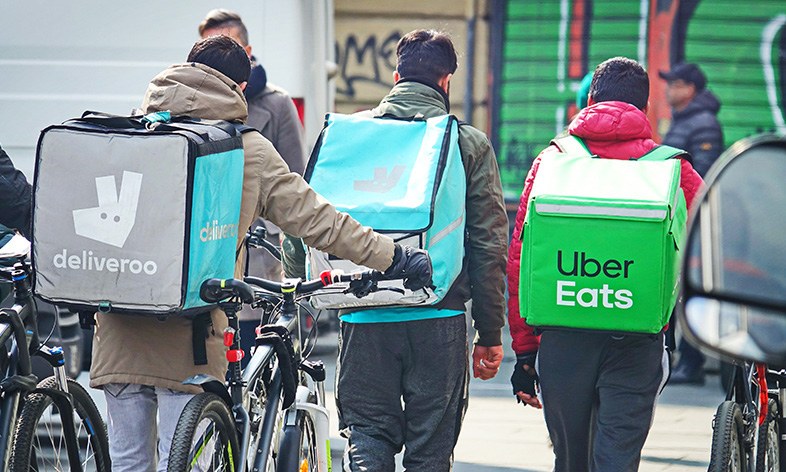
In June 2026, the International Labour Conference adopted the text Decent Work in the Platform Economy: the first international labour standard for platform work.
For millions of transport workers around the world, this changes the rules for the better. It is a major achievement on which the ITF’s highly skilled negotiators clearly left their mark.
Example 2: An Unusual Alliance With The Vatican And Progressive Employers
Eight years ago, the ITF joined forces with the Vatican and a group of progressive employers. Together, they launched a global dialogue on rights and decent working conditions for transport workers. This is precisely the kind of unusual alliance that I believe can make a real difference.
The dialogue and the joint declaration that followed were based on a shared understanding that many traditional international institutions have been weakened. In that context, institutions such as the Church, responsible employers and the international trade union movement share a responsibility to defend dignity, rights and social justice.
Transport workers are not in an easy position in the global struggle for better working conditions. But together we have become more strategic in our approach and more willing to enter into new forms of cooperation with those who share our ambitions, whether they want to travel the entire road with us or only part of it.
In difficult times, these achievements give us sound reasons for optimism. They deserve to be recognised, celebrated and built upon.
That is not compromise. It is how we build hope in uncertain times.
Example 3: Social Dialogue With Global Transport Companies
My own country, Denmark, is home to two global transport giants: Maersk, a world leader in shipping, ports and logistics, and DSV, now the world’s largest company in road transport and logistics. The ITF and several affiliated unions have a long tradition of dialogue and negotiation with Maersk.
With DSV, I am personally involved in facilitating talks that will hopefully soon lead to more formal agreements between the ITF and DSV. These should strengthen social dialogue and promote healthy and safe working environments for transport workers throughout DSV’s global operations and, importantly, across the company’s extensive network of subcontractors.