But anyone looking at the reality today sees something else: algorithms that control people, platforms that evade rights, software that exploits. The digital transition risks becoming a machine for social regression - unless trade unions intervene.
Technology Is Not A Neutral Force
Anyone who says technology is ‘neutral’ forgets that choices in software are political choices too.
Who decides what an algorithm measures? Who has access to data? Who determines what counts as performance?
In practice, we see technology often being used to centralise power, make people invisible and circumvent social protection.
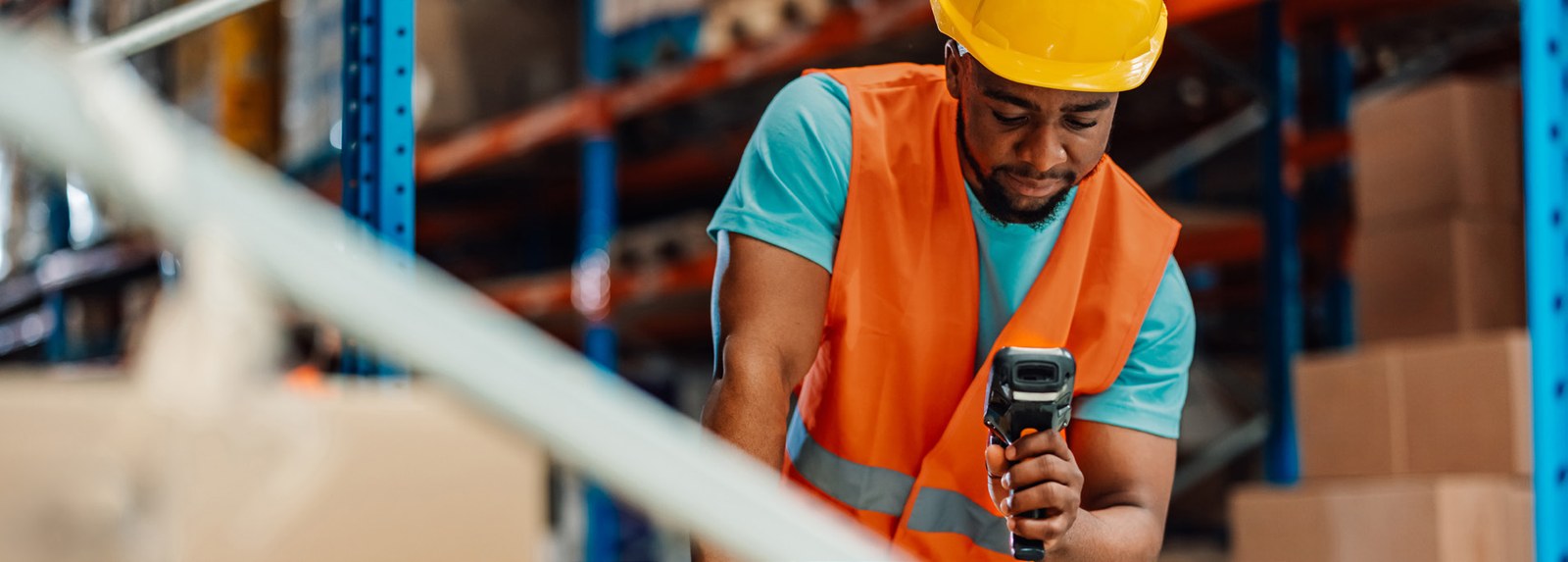
Think of the couriers who do not know their work schedules because an app decides when they will be activated. Think of the truck driver whose performance is measured in real time, with no control over the parameters. Think of the woman working in a warehouse who receives instructions from a robotic arm, with no one to turn to when something goes wrong.
Platforms Promise Freedom But Deliver Control
The digital economy is often sold as a story of freedom, autonomy and flexibility. Workers are supposedly free to decide when, where and how much they work. In practice, however, we often see the opposite. The same technology that promises autonomy makes it possible to monitor workers permanently through apps, GPS systems, sensors and databases. Decisions once made by people are increasingly delegated to algorithms that are not transparent and are almost impossible to appeal. The promise of freedom therefore risks turning into a new form of control.
Platform companies such as Uber, Bolt, Amazon and Deliveroo present themselves as ‘tech companies’, but in essence they are employers avoiding the responsibilities of employment. They reduce people to freelancers without protection, security or a voice. Platforms break the relationship between employer and worker and replace it with a cold, one-sided data structure that excludes any form of social negotiation. What we are seeing is not a technological revolution, but a digital version of social dumping.
The much-praised flexibility has a downside too. For companies, flexibility often means transferring risks to workers. Work is broken down into individual assignments, schedules become unpredictable and more and more people disappear from traditional systems of social protection. What is sold as freedom of choice often translates in reality into insecurity, invisible work and a lack of collective protection.
Digitalisation Without Regulation = Exploitation
Without regulation, digitalisation risks reinforcing existing problems. Work is fragmented into temporary assignments, zero-hours contracts emerge, workers disappear from collective protection systems and wages are increasingly replaced by payment per ride, click or parcel. Solidarity gives way to individualisation, while employer responsibility disappears behind apps and algorithms.
Bus drivers are already being partially replaced or supported by self-driving systems and autonomous shuttles. What seemed futuristic only a few years ago is gradually becoming reality in several European cities.
In Leuven, pilot projects with autonomous shuttles are operating on public roads, with vehicles carrying passengers along predetermined routes without a traditional driver. Amsterdam has also tested self-driving shuttles as part of smart-mobility projects and the further digitalisation of urban transport. Technology companies and governments often present these projects as innovative, sustainable and efficient.
Freight transport is monitored down to the millisecond. Maritime work is automated without consultation. If trade unions do not intervene, it is not only jobs that disappear, but collective rights too.
The Promise Of Technology Only Has Value If Its Benefits Are Shared
Technology can liberate. The same is true of productivity and innovation. New technologies make companies more efficient and profitable than ever. But without clear rules, there is no guarantee that those productivity gains will benefit workers. Higher profits do not automatically lead to better wages, shorter working hours or greater job security. Nor does automation guarantee that workers who lose certain tasks will be given new opportunities through training or redeployment.
Innovation in itself is not a social project. It becomes one only when workers and their trade unions can help decide how technology is introduced and how its benefits are distributed.
That also means trade unions must have a seat at the table whenever technological innovation is introduced. They cannot remain on the sidelines; they must build their own expertise in artificial intelligence and digitalisation.
A strong example is the AI Toolkit developed by the ITF Dockers’ Section. The toolkit helps dockers and trade unions around the world better understand the impact of AI, automation and data control on safety, work organisation, training and labour rights in ports. It is available at www.itfglobal.org/en/resources/dockers-ai-toolkit-future-work-series.
The toolkit starts from a simple but fundamental principle: technology must not replace workers without social dialogue, and digitalisation must never be used to weaken safety, working conditions or trade union rights. AI must serve people, not the other way round.
An example of how not to do it can be found in the European inland navigation sector. A great deal of advanced innovation is under way, including technology intended to enable remote-controlled navigation. Yet the simple digitalisation of navigation-time records still seems impossible to achieve, partly because most employers do not actually want oversight of compliance with sailing and rest times.
This means digital labour must finally be legally recognised as real work, with all the rights that entails. Platform workers, data workers and employees managed by algorithms are just as entitled to protection, collective bargaining and human dignity as any other worker. The future of work must not become a technological jungle in which rights disappear as soon as work is organised digitally.
The port of Hamburg shows that social dialogue is not a theoretical concept. When new forms of automation and artificial intelligence were introduced, the German trade union ver.di succeeded in securing binding agreements on training, job security, transparency and worker participation. The agreement shows that technological innovation does not inevitably lead to social regression. When trade unions are involved in time, technology can also serve safer and better work.
We Need To Reclaim Technology
Technology is not a force of nature; it is a social choice. And if that choice is made today without the voice of working people, it is our duty to strengthen that voice.
The digital economy is not a free zone. It is a workplace, and every workplace needs rights. The future of work can be social, fair and democratic, provided trade unions are able to play their role.
Not on the sidelines, but at the centre.
More than ever: together. For a digital economy with human dignity.