
That is why trade unions must also be present in the platform economy. As long as platform workers do not organise collectively, the balance of power will never change. Companies such as Uber, Deliveroo and Uber Eats build their model precisely on the individualisation of labour: workers become ‘self-employed’, algorithms replace human managers and social protection is dismantled in the name of flexibility.
Yet several international examples show that collective organisation is possible in this new economy too.
The Memorandum of Understanding between the International Transport Workers’ Federation (ITF) and Uber marked an important step towards international social dialogue in the platform sector. The agreement recognised that platform workers also have a right to representation, consultation and collective protection.
The Future of Work Advisory Group within the ITF is also becoming one of the organisation’s most important strategic areas for the coming years. Artificial intelligence, platform work and the digitalisation of transport are central themes.
Concrete agreements have also been concluded between trade unions and platform companies in several countries. In Belgium, BTB plays a pioneering role in organising Uber drivers and platform workers. In the United Kingdom, Australia and Spain too, new models of collective representation and social dialogue have developed within the platform economy.
A significant breakthrough came in Australia, where the Transport Workers’ Union (TWU) reached agreements with Uber Eats and DoorDash on minimum rates and better protection for food-delivery workers. The agreement showed that digital labour does not have to fall outside social rights. Even in an economy driven by algorithms, collective organisation remains both possible and necessary.
Technology alone will not determine the future of work. What will determine that future is whether workers remain sufficiently organised to have a say in how technology is used. Trade unions therefore cannot stay on the sidelines. They must be present wherever work is changing, even when that work is directed by apps, data and artificial intelligence.
Do Not Wait - Demand
This also requires a new trade union infrastructure. Traditional consultation bodies alone will not be enough to monitor the impact of artificial intelligence, algorithms and digitalisation.
In more and more sectors, there is therefore a need for specialised consultation structures in which trade unions can analyse technological developments, build expertise and represent workers. Think of union AI units, digital working groups or technology committees that assess new systems before they are rolled out in the workplace. Just as safety and wellbeing now have a permanent place in social dialogue, technology will need one too.
We cannot afford to act only after the damage has been done. The trade union reflex must become anticipatory: with every digitalisation plan, every investment project involving new systems and every wave of automation.
When artificial intelligence and automation lead to higher productivity, the debate on shorter working hours must return to the table as well. This is not a nostalgic trade union demand, but a logical social translation of technological progress. If the same amount of work can be done with less human labour, the gains should not flow exclusively to shareholders. Some of them can also be converted into more free time, a better work-life balance and a fairer distribution of available work, while maintaining pay.
Interestingly, this discussion no longer comes only from trade union circles. A number of leaders in the technology sector also acknowledge that artificial intelligence raises fundamental questions about working time, employment and income distribution. Companies such as Microsoft, OpenAI, Nvidia, Zoom and, closer to home, AFAS increasingly refer to the possibility of shorter working weeks as a result of productivity gains from AI. The question is therefore not whether that debate will come, but who will determine its terms.
When The Architects Of AI Suddenly Become Social Reformers
The warnings from Sam Altman, founder and creator of OpenAI, the company behind ChatGPT, about the social consequences of artificial intelligence deserve attention. Not because they come from a visionary philanthropist, but precisely because they come from one of the most powerful players in the sector shaping the revolution itself.
Altman sketches a future in which AI delivers an unprecedented leap in productivity. To absorb its social consequences, he has proposed, among other things, a public wealth fund, a robot tax, a four-day working week and automatic income protection. At first sight, that sounds remarkably progressive. These proposals touch on debates the trade union movement has been conducting for more than a century: how do we make sure technological progress does not enrich shareholders alone, but also benefits working people?
Some scepticism is nevertheless warranted. When the fox preaches, guard your geese.
As more and more technology barons openly align themselves with authoritarian and far-right political projects, their credibility has hardly increased. Several Silicon Valley leaders who yesterday presented themselves as defenders of democracy now appear as allies of political forces that put those very democratic institutions under pressure. Sam Altman too has strategically repositioned himself several times in recent years, depending on circumstances and the interests of the moment.
That does not mean we should ignore his warnings. On the contrary. The fact that even those at the top of the AI industry are talking about massive disruption to labour markets and income systems confirms exactly what trade unions have long been saying: artificial intelligence is not a neutral technological development. It is a societal shift in power with potentially far-reaching consequences for work, democracy and inequality.
The crucial question is therefore not whether AI should be regulated, but by whom. Can we leave the future of technology to a handful of companies with greater financial resources than many states? Or do we need democratic control and international agreements?

Do we allow a handful of technology companies to determine how AI reshapes our economy and labour market, or does government intervene to steer that development in the public interest?
That contrast is particularly visible today in the different approaches taken by the United States and China. In the United States, technology companies are largely given a free hand. The development of ever more powerful AI systems is driven to a significant extent by commercial interests and by the ambition to replace as much human labour as possible.
China, despite all the justified criticism of its authoritarian political system, follows a different logic. There too, enormous investments are being made in AI, but the government is simultaneously trying to avoid simply casting millions of workers aside. It links AI policy to retraining, worker protection, support for sectors under pressure and even court rulings against companies that replace staff without taking account of their social responsibility. The message is clear: technological progress should not serve profit alone, but must also contribute to employment and social stability.
Above all, that contrast shows that the future of artificial intelligence is not an unavoidable destiny, but the result of political choices.
The Chinese model is obviously not an example for democratic societies, but one lesson can be drawn from it: governments do not have to stand by helplessly while technology companies write the rules. Democratic states too can set clear boundaries, protect workers and put AI at the service of society. The question is therefore not whether we will use AI, but who decides what that technology is used for: a small group of tech billionaires, or democratically elected government acting in the interests of society as a whole.
A global approach is increasingly necessary. Ideally, artificial intelligence should be embedded in an international regulatory framework comparable to treaties on nuclear energy, climate or labour standards. A global AI treaty under the auspices of the United Nations could be a starting point. That model obviously has its limitations too. The UN is slow, divided and often paralysed by geopolitical tensions. But between a world in which a few tech billionaires write the rules and a world in which states jointly set boundaries and conditions, the multilateral path remains the most democratic option.
The trade union movement has a historic task here. Just as earlier industrial revolutions required social correction, the AI revolution will not automatically produce greater wellbeing for everyone. Without collective action, the gains from automation risk flowing to a small economic elite while the risks are shifted onto workers and citizens.
Ultimately, then, the debate about artificial intelligence is not about technology. It is about power. About ownership. About democratic control. And above all about who reaps the benefits of tomorrow’s productivity. Anyone who leaves that question unanswered risks allowing the greatest technological revolution of this century to become the greatest transfer of wealth and power in modern history.

That is exactly why trade unions cannot afford to remain neutral. As so often in history, it will not be the machines that determine the future, but the balance of power surrounding those machines.
That means trade unions must be involved in policymaking on digitalisation and artificial intelligence from the outset. Workers must have rights to information, consultation and collective impact assessments when new systems are introduced. Clear agreements must be in place beforehand on redeployment, training, retraining and income guarantees for workers affected by technological change. Above all, clear red lines are needed: automation must never be used as an excuse to dismantle social rights, working conditions or collective protection.
The Workplace Is Not Technology-neutral
This also means trade union representatives need to develop new knowledge and skills. Anyone who wants to defend workers in a digital economy must understand how data are collected, how algorithms make decisions and what automation means for working conditions. And we must use that knowledge to protect and empower our members. Trade union education will therefore need to devote increasing attention to technology, artificial intelligence and digital work organisation. Not because trade unionists need to become programmers, but because they need enough understanding to defend workers’ interests effectively.
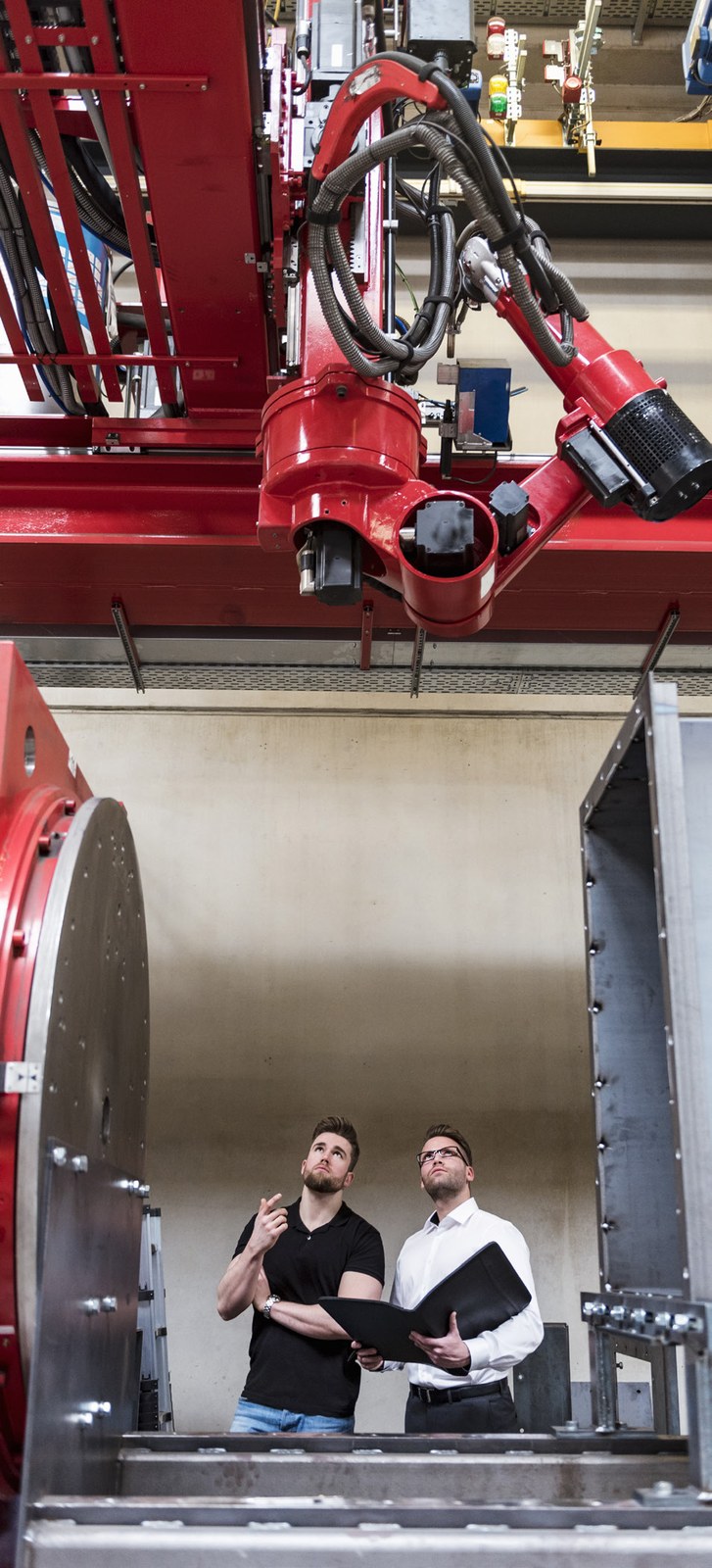
The workplace is where technology is introduced, and therefore also where it must be socially corrected. That requires well-trained trade union representatives, new forms of consultation and digital literacy within trade union structures.
The trade union role is changing too: from negotiating working hours to negotiating systems. From defending pay to defending control. Technology itself will increasingly have to become a subject of collective bargaining. Those negotiations must address not only the consequences of new systems, but also how they are introduced, used and monitored. In the future, collective agreements will define not only pay and working conditions, but also data, algorithms, monitoring, artificial intelligence and digital work organisation. The question is no longer whether technology is a working condition, but how workers gain a collective say over it.
The Future Is International And Coordinated
Digitalisation does not stop at national borders, and neither can our struggle. What Amazon tests in Italy today, it may roll out in Belgium tomorrow. What Uber negotiates in France today affects working conditions in Spain. International coordination is therefore not a luxury, but an absolute necessity.
Within the international transport federations ITF and ETF, the international trade union confederations ETUC and ITUC, and other international structures, trade unions must develop common strategies, share best practices and organise cross-border action. Technology companies operate globally, while labour protection is still too often organised nationally.
Trade unions will therefore increasingly need to formulate common demands around technology and digitalisation. When multinational companies use the same algorithms, platforms and data systems worldwide, it makes little sense for each country to respond separately. International coordination makes it possible to agree common minimum standards on transparency, labour rights, training, social protection and the introduction of new technologies.
At European level too, there is growing recognition that artificial intelligence and the platform economy cannot simply be left to the market. Through new regulation, the European Union is trying to frame digital technology more strongly and place it under democratic control. With the AI Act, Europe introduced rules on transparency, safety and accountability in the use of artificial intelligence. The European Platform Work Directive of October 2024 requires platform companies to classify workers correctly and make algorithmic management more transparent. The Digital Services Act and Digital Markets Act are also intended to regulate the power of large technology platforms more effectively.
This development shows that regulation does not have to be a brake on innovation, but can instead be a condition for public trust.
Just as labour law, safety standards and environmental rules are necessary for markets to function properly, clear rules are also needed for artificial intelligence and digital platforms. Trade unions must therefore continue to press for enforceable public regulation that protects workers against abuse and guarantees transparency, human oversight and fundamental rights.
These are important steps, because technology without democratic control almost automatically leads to concentration of power, social dumping and the erosion of labour rights. The choice is therefore not between innovation and regulation. The real choice is between technology serving society and technology driven entirely by the logic of profit and market power.
Europe has a historic responsibility here. If we leave artificial intelligence and digitalisation entirely to Silicon Valley, big tech and shareholder interests, workers once again risk paying the price for a transition over which they have no control. If trade unions, governments and international institutions jointly impose clear social rules, technology can also make work safer, more humane and more sustainable.
Who Pays For The Digital Transition?
One fundamental question is often overlooked in the debate on artificial intelligence and automation: who actually benefits from the enormous productivity gains created by these technologies?
Today, we see a handful of technology companies reaching unprecedented stock-market valuations thanks to the development of AI systems. Companies such as Microsoft, Nvidia, Alphabet, Amazon and Meta have seen their market values rise by trillions of dollars in recent years. At the same time, concern is growing about job losses, increased work pressure and the impact of automation on existing occupations.
That contradiction is unsustainable.
When artificial intelligence succeeds in performing tasks faster, more cheaply and more efficiently, new wealth is created. The question is not whether that wealth exists, but who owns it. Do the proceeds remain exclusively with shareholders and investors, or is part of that wealth returned to the society that made the technological development possible?
That is why more and more progressive economists, trade unions and political leaders are calling for new forms of redistribution.
US independent Senator Bernie Sanders, who works closely with the Democratic Party, proposed taxing a share of technology companies’ exceptional profits and equity valuations and using those resources for public investment, social protection and financing the social consequences of automation.
That debate must not be reduced to a discussion about taxation. At its core, it is about justice. When technology makes workers more productive, they too should share in the returns. When automation reduces the amount of labour required, that should be capable of translating into shorter working hours without loss of pay. When AI replaces existing jobs, companies must contribute to training, retraining and lifelong learning.
History teaches us that technological progress does not automatically produce social progress. During the Industrial Revolution, the benefits of new technology were shared more widely only after workers organised and won social rights. Today, we face a similar challenge.
The
digital economy creates enormous wealth. The trade union movement must ensure that wealth does not remain concentrated in the hands of a small technological elite, but is used for the collective good. Technology must not increase inequality. It should contribute to greater prosperity, more free time, stronger social security and greater human dignity.
That is ultimately the heart of the debate about artificial intelligence: not what the technology can do, but who it works for.
We Are Not Passive Witnesses
It is time to rewrite the story. Trade unions are not an obstacle to modernisation. We are modernisation - but with social substance.
Trade unions must invest in AI expertise themselves
When we discuss the role trade unions can play in the debate on artificial intelligence, we also need to look at ourselves. If we claim a full place at the bargaining table when AI is introduced, then trade unions must build the expertise required to occupy that place effectively.
The first steps have already been taken. In 2025, for example, BTB organised the WHAI? conference, bringing together a broad group of stakeholders - trade union representatives, journalists, politicians, scientists and AI specialists - to discuss the introduction of artificial intelligence. The conference resulted in a report entitled AI is not the end. It’s a start. But … WHAI?. The report is available at www.whai-conference.com. Initiatives like these are a first step towards building trade union expertise on artificial intelligence.
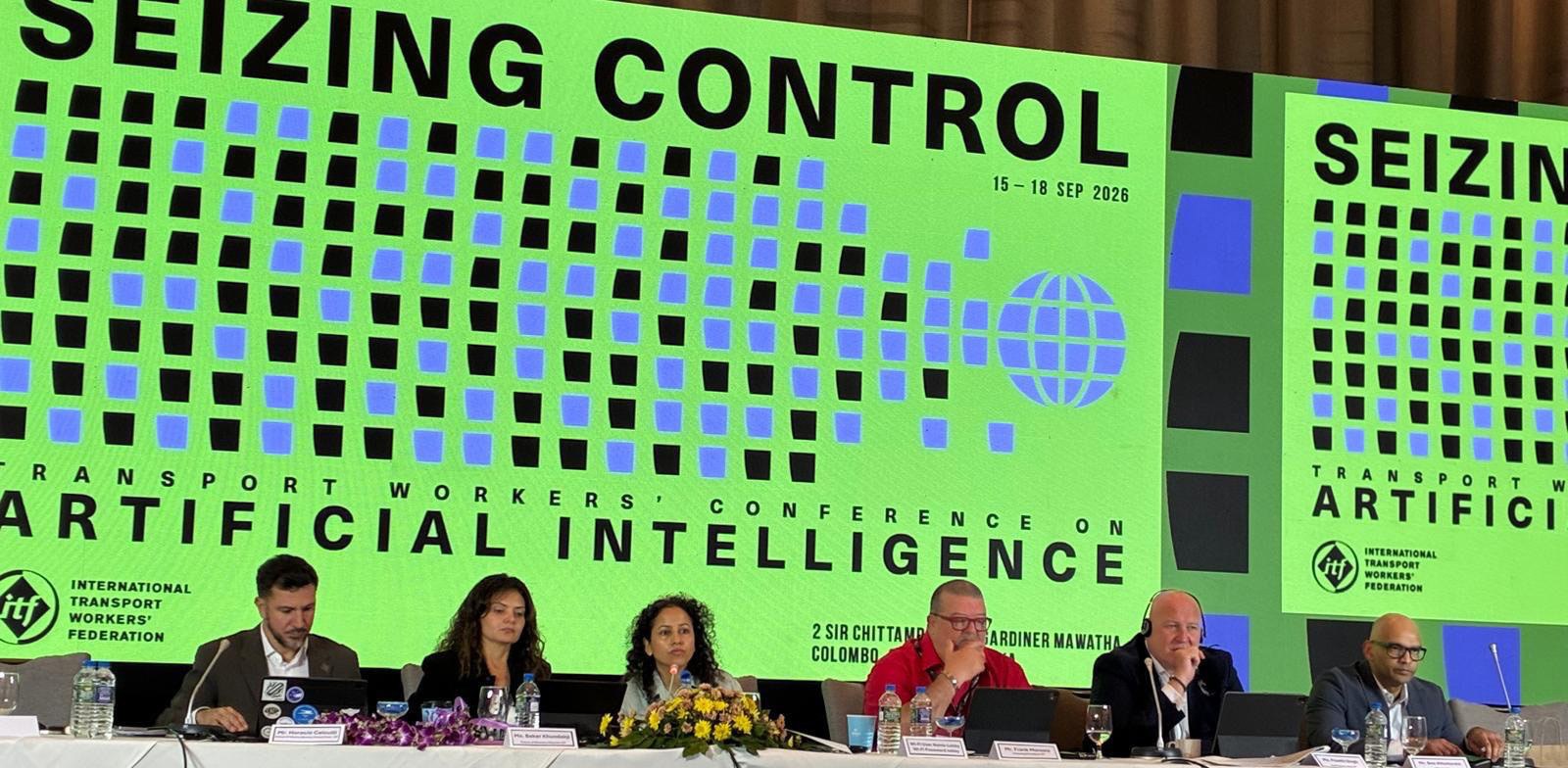
There are international initiatives too. The ITF has a Future of Work Advisory Group with a particular focus on the platform economy. The group has played an active role in discussions with Uber. One of its recent initiatives was an international conference on the future of work with artificial intelligence, Seizing control, held in Sri Lanka in September 2026.
The problem is that these are still largely isolated initiatives. They encourage the exchange of information and create space to discuss ideas and strategies, but a coherent and coordinated approach is still missing.
Trade unions will therefore have no choice but to invest structurally in AI expertise. That means not only recruiting specialised staff, but also giving AI a permanent place within research and policy departments. Only then can trade unions participate in discussions with employers about the introduction of artificial intelligence on the basis of sufficient knowledge.

One important avenue is to conclude memoranda of understanding with large multinational companies. Companies such as DHL, Uber, Essers and Maersk already have detailed strategies for introducing AI. They too face a fundamental choice: do they introduce the technology unilaterally, or do they shape its implementation through social dialogue with trade unions? There are good arguments for the second approach, but trade unions must also be prepared to engage actively in such cooperation agreements.
A memorandum of understanding does not have to be a non-binding declaration of intent. On the contrary, it can provide a concrete framework for managing the social, economic and ethical consequences of AI. BTB, for example, developed a number of proposals on the introduction of autonomous vehicles. Although those recommendations relate to one specific application of artificial intelligence, they illustrate the issues that such agreements can address.
A first element concerns training and retraining. The introduction of AI and autonomous vehicles will inevitably change existing occupations or even make some disappear. Employers and platform companies must therefore contribute financially to continuous training and retraining, for example through a social fund jointly managed by companies and worker representatives. Workers who have themselves made substantial investments in their professional activity should not bear the full financial consequences when autonomous vehicles undermine their income or employment. Mechanisms must be developed to compensate at least part of those investments.
Safety is a second crucial area. Although autonomous vehicles can reduce human error, they bring new risks, such as cyberattacks, software errors, faulty updates or failures in communication systems. Clear procedures are necessary for emergencies, for example when a passenger becomes unwell or an accident occurs. Protocols must exist for automatically alerting the police and emergency services and for rapidly assessing the seriousness of incidents.
Accessibility also deserves particular attention. The digitalisation of mobility services must not lead to social exclusion. Today, a significant part of the population does not have sufficient digital skills to use such services exclusively through apps. Autonomous vehicles must also be fully accessible to people with disabilities, with particular attention to safe assistance when boarding and alighting and to the correct securing of wheelchairs.
People must remain at the centre.
A memorandum of understanding should also recognise the role of government. Governments and local authorities must retain their regulatory powers to ensure fair conditions of competition. The market alone must not determine the speed at which autonomous vehicles are introduced; this must be the result of social and political choices. Service to less profitable or remote regions must also be guaranteed. Profitable operations in urban areas can help finance a universal mobility service.
Finally, we must not lose sight of the fact that new technologies can only be introduced successfully when the necessary conditions are in place. For autonomous vehicles, this includes adapting infrastructure. Without suitable roads, digital networks and traffic infrastructure, safe and socially responsible introduction remains impossible.
The same applies at national and company level. There too, we should strive for collective agreements that provide a framework for the introduction of artificial intelligence.
Ultimately, the debate is not about whether artificial intelligence is good or bad. AI is a reality and is being introduced at an exceptionally rapid pace in virtually every sector of business. The crucial question is therefore not whether that development will take place, but how it will take shape.
Trade Unions Are Not Conservative. They Are Necessary
We cannot stop technology, but we can steer it. And that is what our movement has always done. Whether it was the steam engine, the assembly line or globalisation, trade unions have repeatedly forced social justice into periods of change.
The same is true today:
without us, there will be no social guarantees, no protection and no humanity in the system.
More than ever: together. For a future in which technology makes us stronger, not redundant.