Fascism Is Never Neutral Towards Labour
Fascism did not come out of nowhere in the 1930s. It found its way through parliaments, through a climate of crisis and through divisions within the labour movement. But once it came to power, its intentions were ruthlessly clear: every form of independent workers’ organisation was banned or subordinated to the state.
In Nazi Germany, trade unions were literally destroyed in 1933. Buildings were occupied. Assets were confiscated. Leaders were arrested or deported. The Deutsche Arbeitsfront that replaced them was not a trade union, but a control mechanism of the regime.
In Mussolini’s Italy, too, the independent trade union movement was systematically eliminated. The so-called Corporate State created the appearance of consultation between employers and workers, but in reality every form of independent trade union action was destroyed. Strikes were banned, social agreements were imposed from above and trade unions were placed under state control. Those who resisted were intimidated, imprisoned or simply eliminated.
The murder of socialist MP Giacomo Matteotti in 1924 became a turning point. After publicly denouncing electoral fraud and fascist violence, he was abducted and murdered by fascist militias linked to Mussolini’s regime.
Matteotti understood early what many at the time did not yet want to see: authoritarian movements do not always destroy democracy head-on; they hollow it out from within, step by step. Mussolini became a dictator through the system, not in spite of it. He used elections, institutions, propaganda and fear to slowly empty democracy of its substance.
That is precisely why history remains relevant.
Democracy rarely dies overnight. It is weakened and hollowed out until social rights, independent media, trade unions and opposition are allowed to exist only for as long as they pose no real threat to those in power.
History is not a museum piece. It reveals a pattern. When the far right rises, it always tries to break the organised working class. That is because trade unions are, by definition, the opposite of authoritarian power: they are collective, based on solidarity and democratically organised.
That also explains why trade unions are so often among the first targets of authoritarian regimes. Trade unions bring people together outside state control and teach workers to debate, organise and take decisions collectively.
Moreover, the trade union movement crosses national borders. Through international solidarity, cross-border cooperation and global campaigns, it provides a counterweight to nationalist propaganda and divide-and-rule politics. That is precisely why authoritarian leaders do not see trade unions as partners, but as potential threats to their hold on power.
Populism Undermines From Within
Contemporary populism operates more subtly than the classical authoritarianism of the last century. It sometimes even wraps itself in social or trade union language. It talks about ‘ordinary people’, ‘the elites’ and ‘forgotten workers’.
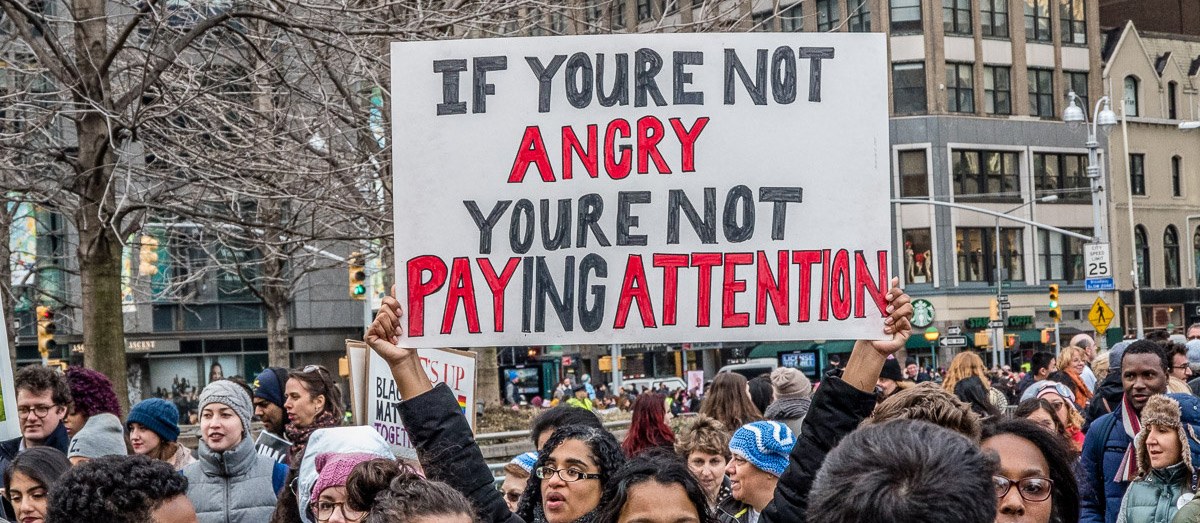
Behind that rhetoric often lies the same mechanism: divide-and-rule politics, distrust of workers organising collectively and a systematic dismantling of solidarity.
Today, that divide-and-rule mechanism takes different forms. Populist and far-right movements rarely present social problems as they really are. Instead of focusing attention on wage restraint, social dumping, tax inequality, exploitation and the growing concentration of economic power, they put forward scapegoats.
They blame migrants for the erosion of social rights, whereas social dumping is in reality created by employers who play workers off against one another and governments that provide insufficient protection. They portray feminists as a threat to society while the real challenges remain: the gender pay gap, discrimination and gender-based violence. They present climate policy as an enemy of jobs, when what workers actually need is a just transition that combines sustainable jobs with social protection.
The goal is always the same: to divide workers so that they no longer organise together around their shared interests. Those who succeed in directing people’s anger away from structures of economic power no longer need to change those structures.
Today, the attack on trade unions is often not frontal. It proceeds through financial pressure, administrative restrictions, legal proceedings and political framing. Social action is criminalised, strikers are portrayed as holding the economy hostage and trade unions are dismissed as out-of-touch elites or political organisations.
Fundamental democratic rights are increasingly presented as obstacles to economic growth or public order. The method has changed, but the goal remains the same: to discourage workers from organising collectively and to tilt economic power relations further in favour of employers.
Fascism and authoritarian populism share one fundamental characteristic: they tolerate no countervailing power. They want a society in which leaders claim to represent ‘the people’ directly, without critical media, without an independent judiciary and without strong trade unions. In that logic, trade unions are no longer democratic partners, but obstacles to be controlled, weakened or eliminated.
This does not happen in the same way everywhere today. In some countries we see open repression; in others, a more gradual shift towards intimidation and the criminalisation of protest. But the common thread remains the same: those who denounce social injustice are increasingly portrayed as a threat to order, the economy or national security.
In the United States, the radicalisation of migration policy has created a climate in which federal immigration services such as ICE act increasingly aggressively, not only against migrants but also against citizens who oppose that policy.
The fatal incidents involving Alex Pretti and Renée Nicole Good triggered fierce protests and reignited debate about police violence, repressive state power and the militarisation of migration policy. What was once presented as exceptional action against ‘illegal migration’ increasingly risks creating a broader culture of fear and intimidation.
In South Korea, too, it became clear how quickly social mobilisation can descend into violence when governments treat protest primarily as a security problem. Trade union activist Seo Gwang-Seok died on 20 April 2026 following disproportionate police action during a peaceful demonstration by transport workers. For the international trade union movement, his death became a symbol of the risks faced by trade union activists worldwide when social struggle is criminalised.
Meanwhile, in Nepal, the government is attempting to drastically restrict and even abolish trade unions in the public sector. International trade union organisations warn that such measures attack not only labour rights but also fundamental democratic freedoms. Where workers are no longer free to organise, democracy itself loses an essential counterweight to political and economic power.
Across Europe, we see far-right movements trying to turn social frustration into division and hostility - in Hungary, Poland and Italy, for example. And this happens with the approval or passive support of populist forces that claim to speak for ‘the people’ while systematically undermining the instruments of solidarity. In the United Kingdom, we see similar dynamics around figures such as Tommy Robinson, who use migration and national identity to organise division.
At first sight, such mobilisations may appear marginal or even folkloric. Yet step by step they shift the boundaries of what society considers acceptable. What seemed extreme yesterday becomes discussable tomorrow.
In Belgium, too, we are seeing social struggle increasingly treated as a legal or political problem. The conviction of former ABVV president Thierry Bodson in the case concerning a trade union action on a motorway, and the legal proceedings against AC Antwerp president Bruno Verlaeckt following a trade union action in Antwerp, were experienced by many trade unionists as more than individual court cases. They came to symbolise a broader trend in which social action is discouraged through the courts, damages claims and legal pressure.
That creates a dangerous precedent. When trade union action is no longer regarded as part of democratic social conflict, but as disruption of public order or economic sabotage, society changes fundamentally. The right to exert collective pressure is then eroded step by step.
That is the real dividing line of our time: between societies in which power can be scrutinised and corrected, and societies in which power increasingly refuses to be challenged.