The promise of efficiency is loud, but for those working in transport the more urgent question is: will there still be room for human work?
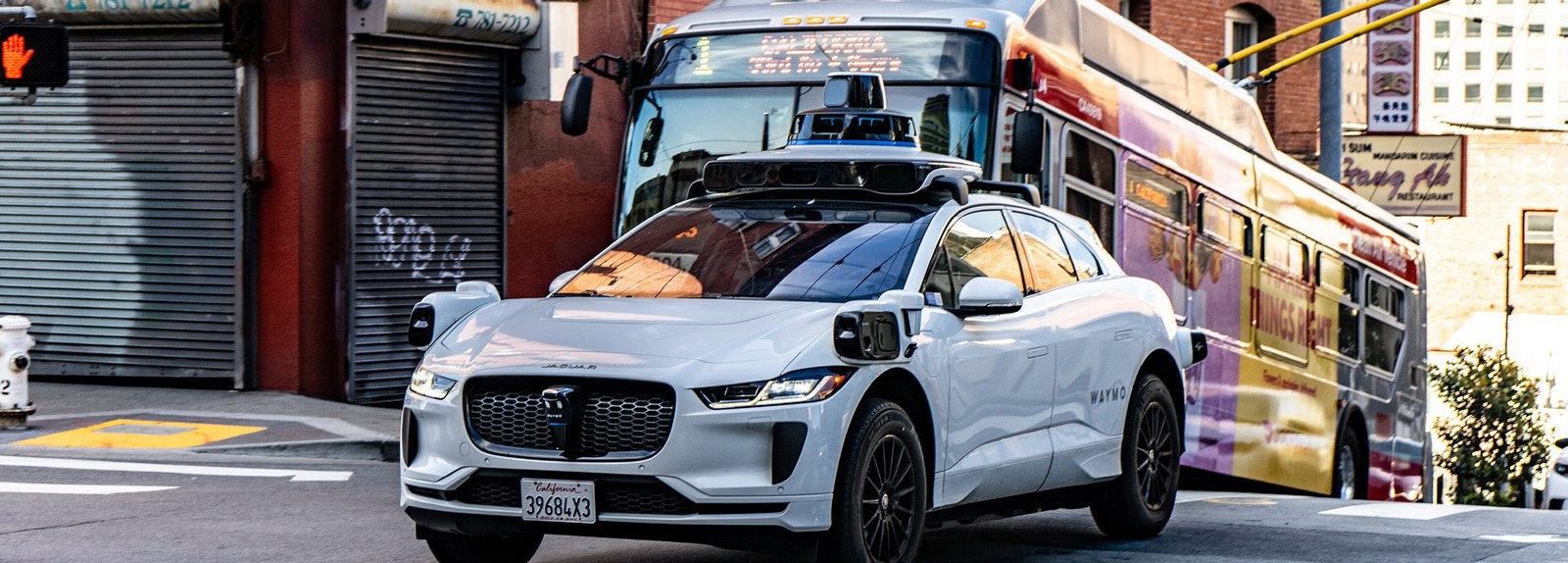
In the United States, Waymo’s self-driving taxis
Waymo is a subsidiary of Google's parent company Alphabet - are already operating commercially in cities such as Phoenix, San Francisco and Los Angeles. The vehicles operate without a conventional driver and continuously process enormous amounts of data through cameras, sensors and AI systems. Waymo has already completed millions of autonomous kilometres on public roads and openly positions itself as a pioneer of a future in which human drivers become largely unnecessary.
Tests with autonomous mobility are also well under way in Europe. In London, several pilot projects are testing self-driving vehicles and AI-driven urban mobility. Governments and technology companies present this development as more efficient, safer and more sustainable. At the same time, questions are growing about what this means for hundreds of thousands of workers in transport, taxis, logistics and public transport.
Platform companies are investing huge sums to accelerate that transition. In recent years, Uber has invested billions of dollars in autonomous driving technology and entered strategic partnerships with companies such as Waymo, Aurora and Motional. Although Uber sold its own self-driving vehicle division, it remains heavily committed to a future in which platforms organise rides without human drivers. For companies, that means lower labour costs and greater control over data and mobility. For workers, above all it means uncertainty about jobs, employment status and social protection.
From Heavy Work To Digital Control
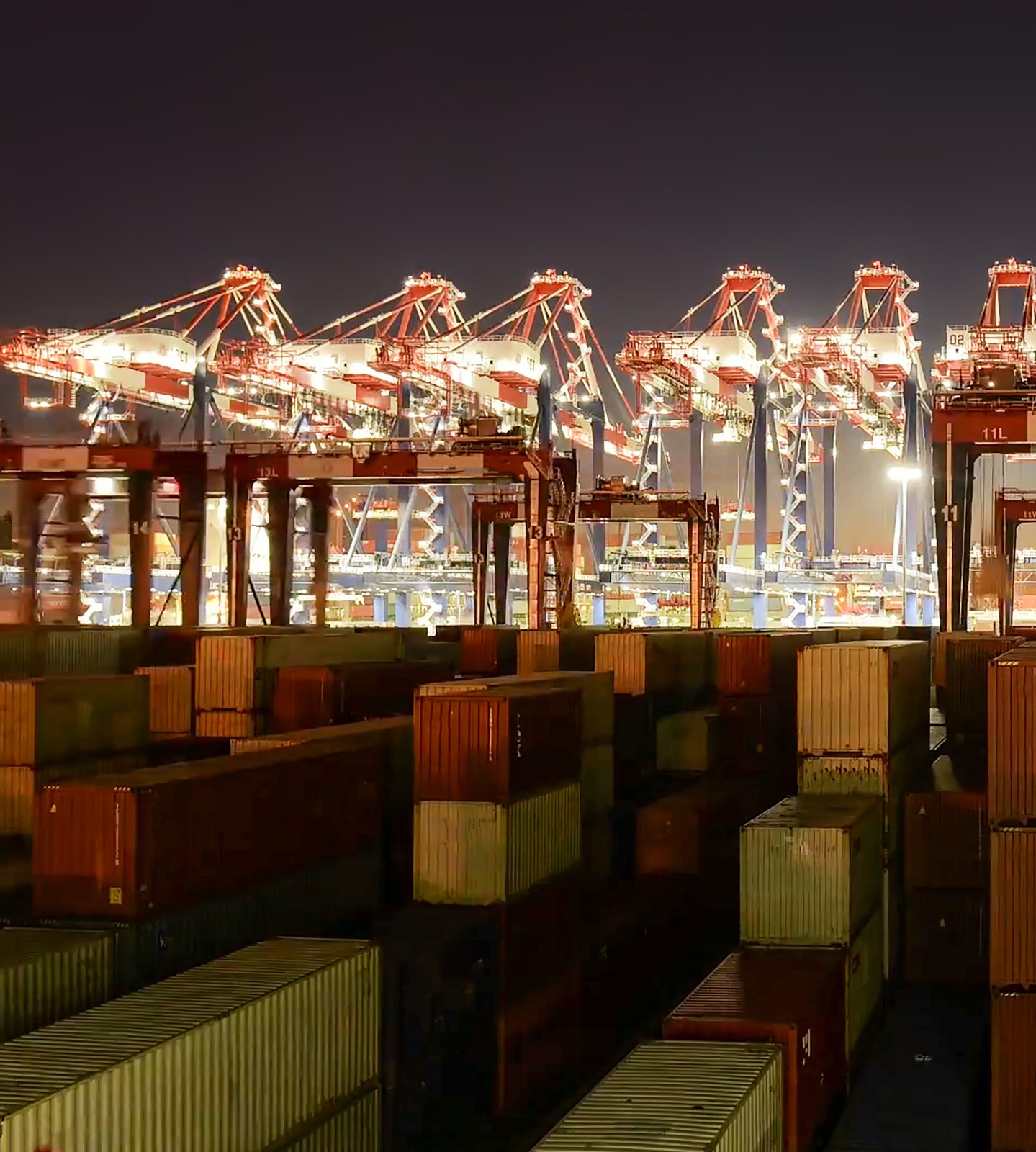
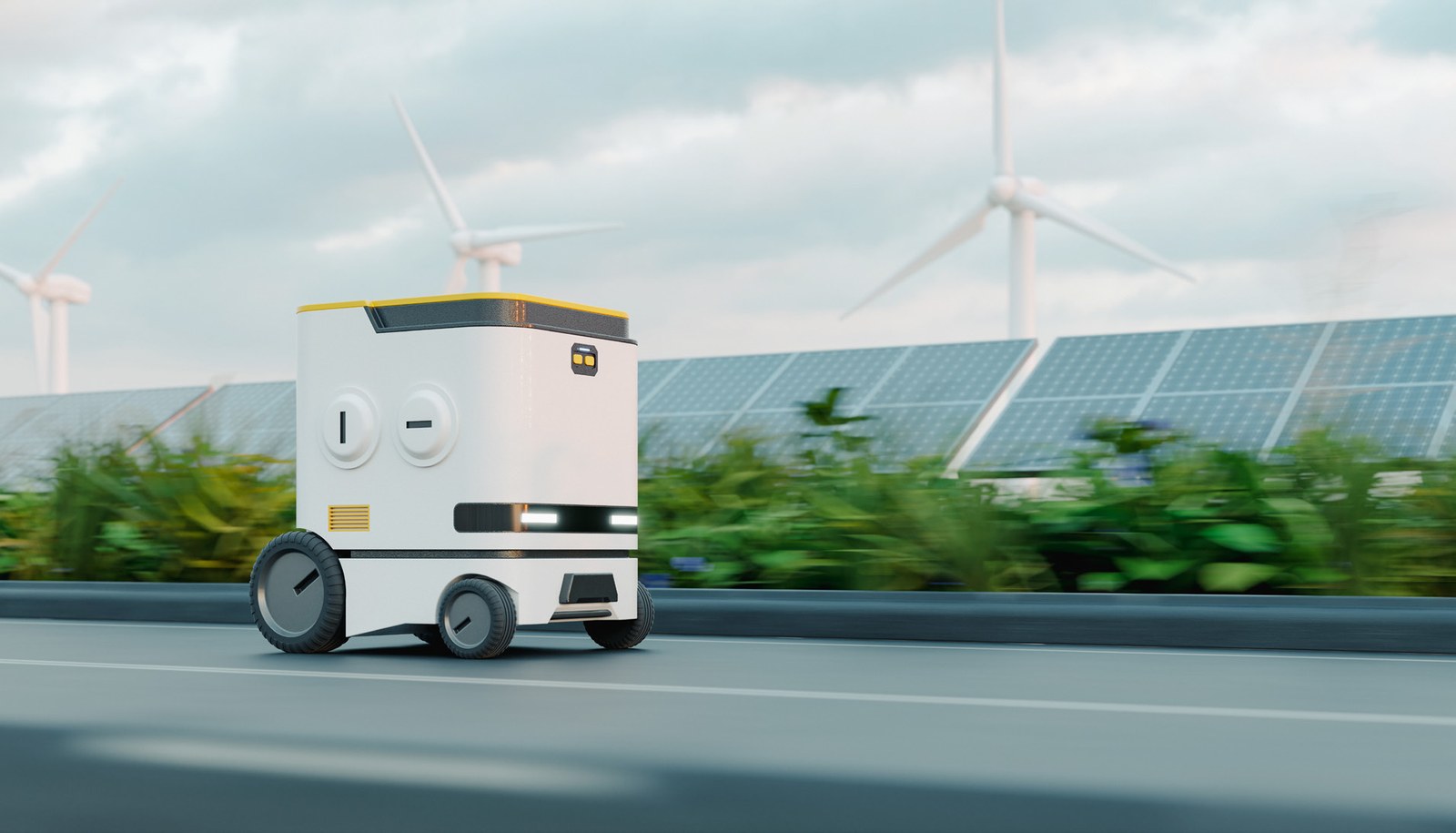
Automated cranes are appearing in ports, self-driving carts in warehouses, and autonomous trucks, buses and taxis on the road. The nature of warehouse work is also changing fundamentally. Robotisation takes over certain physical tasks, but at the same time creates new risks. Workers are expected to work ever more quickly alongside automated systems, while performance pressure often increases. The challenge therefore shifts from purely physical strain to a combination of physical, mental and technological strain. Safety, health and ergonomics must therefore remain central to every form of automation. In theory, these systems should make work easier. In practice, too often we see the opposite: jobs disappear, workloads rise and human room for decision-making shrinks.
Data are increasingly becoming the new employer. Through GPS systems, sensors and real-time monitoring, drivers, warehouse workers and logistics workers are tracked continuously. Technology originally intended to make processes more efficient is increasingly used to measure performance and steer behaviour. When every movement is recorded, the line between support and surveillance begins to blur. This not only creates additional work pressure, but also a fundamental imbalance in the power relationship between employer and worker.
Permanent monitoring creates new risks. ‘Efficiency technology’ is increasingly used to keep workers under constant observation. The distinction between guidance and surveillance becomes blurred. Recording every movement, every break and every decision does not only increase work pressure; it also creates a fundamental imbalance of power between employer and worker. Transparency about the use of data and protection against abuse therefore become essential labour rights in the digital transport sector.
What matters is not how we move, but who controls that movement.
'smart' Systems, Stupid Consequences
The rise of digital systems often produces the opposite of what they promise. Instead of greater autonomy, workers experience less control. Instead of transparency, management focuses only on input and output. Instead of cooperation, fragmentation emerges.
Platformisation in urban logistics and courier services makes matters worse: bogus self-employment, piece-rate pay, and no insurance or social protection. Digitalisation thus becomes a vehicle for social dumping.
For thousands of platform workers, digitalisation today does not mean greater freedom, but greater insecurity. They often perform the same work as conventional employees, but without the same protection, social rights or collective representation. If we do not intervene, we risk creating a parallel labour market in which technology is used to circumvent existing labour law. Platform workers must therefore enjoy the same fundamental rights as every other worker in the sector.
When technology is not socially governed, it becomes an instrument of social disruption.
Transport Remains Human Work
Self-driving trucks, autonomous shuttles and automated transport systems will undoubtedly take over certain tasks. But technological progress must never mean simply writing workers off. When jobs disappear or change fundamentally, training, support and redeployment must be integral parts of transition policy. The social costs of automation must not be shifted entirely onto workers.
Transport is not only about movement, but about responsibility, safety and service.
And about flexibility and judgement that no algorithm can replace.
People resolve conflicts, adapt and respond to the unexpected. In the air, at sea, on the road and on the railways.
That is why human work remains crucial, even in a technological landscape.
The question, then, is not whether technology displaces work, but how work evolves - and whether that evolution is socially just.
The use of predictive software and artificial intelligence in workforce planning also raises important questions. Schedules are increasingly generated automatically on the basis of data and forecasts. This may be more efficient for companies, but it must not result in workers being permanently on call or losing all control over their work-life balance. Digital scheduling must therefore be embedded in clear collective agreements that guarantee legal certainty and predictability.
The Role Of Trade Unions: Shaping Change Instead Of Enduring It
Trade unions must be involved in innovation projects and digitalisation plans from the very beginning. New technology must not be introduced behind closed doors, but must be subject to social dialogue and collective agreements. Workers need guarantees of training, reskilling and job security when roles change or disappear through automation. At the same time, trade unions must have a say in the use of data and algorithms that organise, assess or monitor work. Finally, every major automation project should be preceded by a social impact assessment so that its effects on employment, working conditions and workers’ rights can be identified and adjusted in time.
Without social governance, the future of work becomes a nightmare. With trade unions, it can become an opportunity.
Within the international and European transport workers’ federations, the ITF and ETF, extensive expertise on artificial intelligence, automation and data control in transport is already being developed. In ports, agreements are negotiated on the introduction of automated terminals. In aviation, work is under way on the impact of AI on planning and safety. In road transport, trade unions closely follow the development of autonomous vehicles and digital platforms. The challenge is not to stop technology, but to ensure workers help determine how it is used.
The Future Of Transport Is Not Technological, But Political
Behind technological innovation lies a fundamental social choice. Is technology used to make work more humane, safer and more sustainable? Or is it mainly used to make human labour cheaper, more flexible and more replaceable?
That is precisely why trade unions and workers cannot wait until that future has been fully rolled out. The debate about artificial intelligence in transport is not only about technology, but about power, control and dignity in the workplace.
More than ever: together. For a transport sector in which technology serves decent work.